Association/Community – two names, two purposes
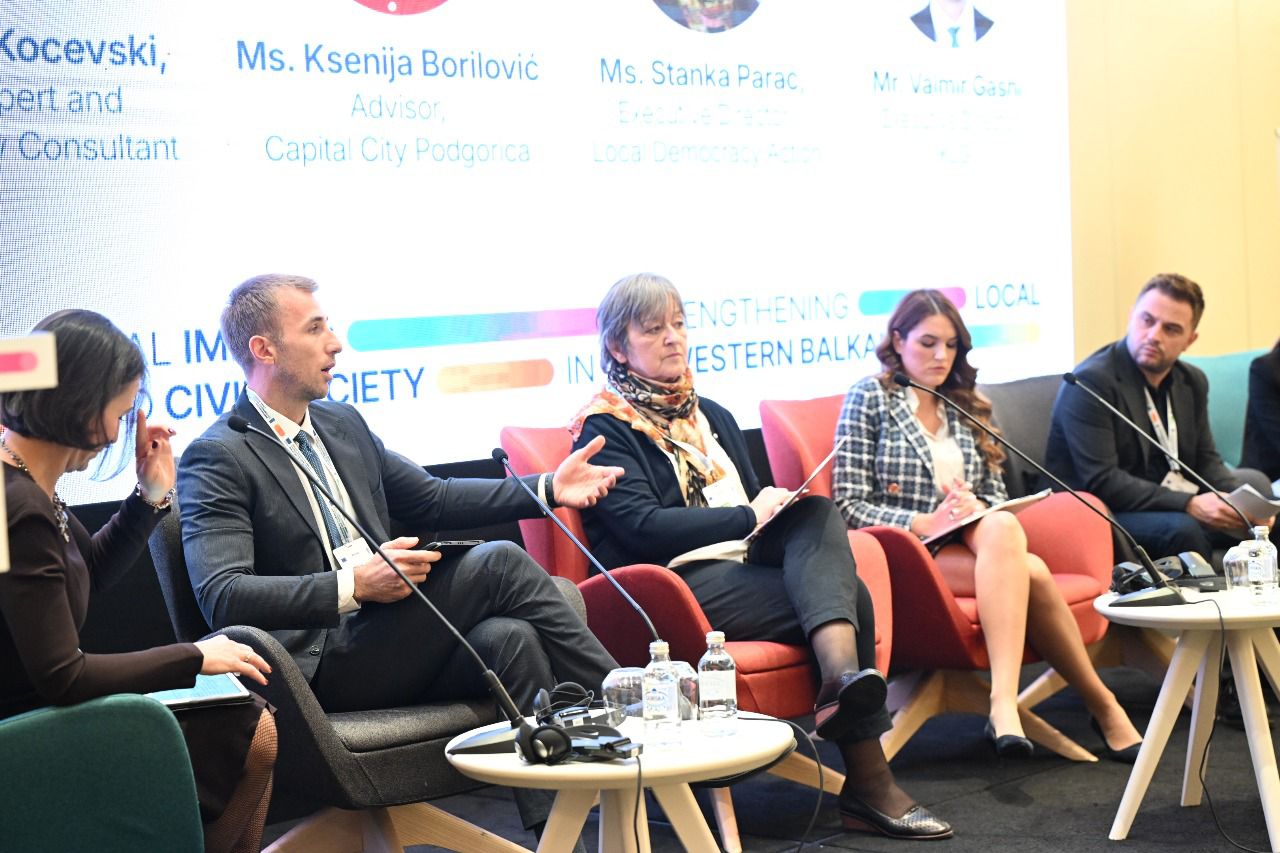
The main finding of the conference “Association/Community – two names, two purposes” was that the A/CSM should not have executive competences because this would conflict with the Constitution of the Republic of Kosovo.…
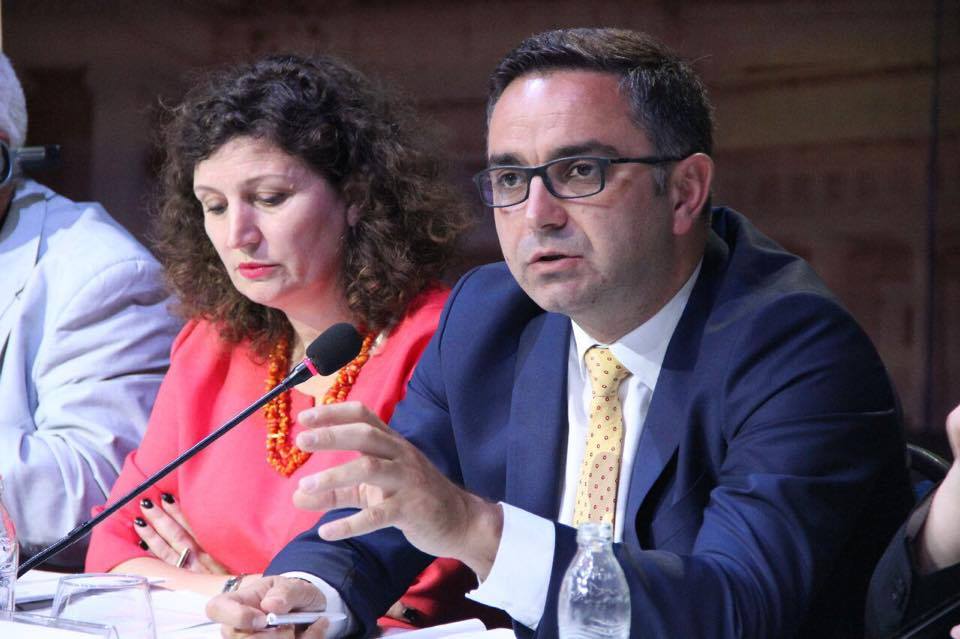
The main finding of the conference “Association/Community – two names, two purposes” was that the A/CSM should not have executive competences because this would conflict with the Constitution of the Republic of Kosovo.
The Association/Community of Serb-majority municipalities, in the form in which it is being attempted, risks being a “supra-municipal” structure with controlling powers over the Serb municipalities, and this endangers the unitary system of the country and its single-tier system of governance.
This process ought to have been within the Constitutional and Legal framework, under which administrative powers could be devolved, but not political or executive ones. “Zajednica” in the Serbian language is much more than an association; it is rather a community or unification of certain elements, whether administrative and so on.
The A/CSM should not have executive competences because this would conflict with the Constitution of the Republic of Kosovo. A fierce battle is therefore expected over the competences the A/CSM will have. This point is among the most important in the Brussels Agreement and is one of four topics on which the parties have not yet managed to reach agreement.
Both the Serbian and the Kosovo side continue not to give many details about the A/CSM. Both negotiating parties present this process as a victory for themselves. Belgrade presents the process as a means of protecting Serbian interests in Kosovo, while Prishtina sees it as a mechanism for extending sovereignty and dismantling Serbian parallel structures. However, it should not be forgotten that there is also a middle position, that of the international community, which on the one hand accepts a greater role for this structure and on the other attempts to integrate them into Kosovo’s institutions.
The whole process has been closed and has consequently left room for the negotiating parties to present it in different ways. Serb representatives who gained legitimacy after the local elections of November 2013 have openly admitted that they do not want the Association to be registered as an NGO, as provided for by Kosovo legislation; the establishment of the Association of Serb Municipalities is considered the most important issue in the dialogue between Kosovo and Serbia.
But consultations on the Association began long ago, and drafts for it have even been prepared and are in Brussels. In the absence of an agreement, the burden still remains on the working groups to continue their work further in order to bring positions closer. It is not yet known what the content of the A/CSM statute will be. Kosovo Government officials stated as early as December last year that they were awaiting comments from Brussels on the draft statute presented for the creation of the A/CSM. But the Serbian side has also repeatedly insisted that it has a steering team working on drafting the statute according to their “demands”.
So far nothing of the drafts has been presented. The Kosovo negotiating party still maintains the position that this body’s statute, form, organisation and functioning must and will be fully in line with the laws and Constitution of Kosovo and with the agreement of 19 April reached in Brussels. This still remains the position of the Republic of Kosovo and the European Union: that the Association will be a non-binding consultative mechanism and will not have an executive or legislative character under any circumstances. However, looking at the overview of the whole negotiating process, it can be seen that the agreements have not been what the parties declared at the outset.
The local Serb representatives began consultations with Belgrade on the creation of the Association long ago. Indeed, on 17 March this year a meeting was held with all the Serb representatives, at a time when the Serb List was boycotting the institutions of the Republic of Kosovo. After this meeting the Serb List came out with a demand that the Association of Municipalities be made operational by November this year.
According to the discussions that emerged from the meeting, the Association is envisaged to have a president, an executive council and an assembly, as well as its own account. As regards competences, the Serbs have insisted that education and health be financed by Serbia. This is intended to be done through a special bank code, with everything passing through the Central Bank of Kosovo (CBK), as is the case with the joint projects of the ten municipalities, which will go through a vote in the Assembly of the Association.
In terms of its name, Association/Community represents two names and two purposes. The terminological meaning of the names Association and Community, with reference to the Oxford dictionary, is as follows: an association means “a group of people organised for the same purposes”, and the word comes from the Latin “asso-ciare”, meaning “to join together”. A “Community”, on the other hand, means “a group of people living in the same place and having common and particular characteristics”, and the word comes from the Old French “comunitete”, meaning “same, unique, alike”. This explanation is given in order to show two names, two reasons. Namely, the difference lies in the purpose, but not in the institutional structuring of the Serb ethnic community in Kosovo and within it. Second, the Association has an operating structure, whereas a community, besides preserving national, racial and religious homogeneity, legally has no functional structure. This whole explanation concerns only the literal aspect, because under the Brussels Agreement the Association/Community of Serb municipalities will have a statute, a president, a vice-president, an assembly and a council, and everything will be drawn up similarly to the Association of Kosovo Municipalities.
Although the Brussels Agreement used two names, Kosovo’s laws use only the name “Association”, and from the moment the name “Community” is used, the laws in question will have to be amended. In view of this, the Brussels Agreement is not the final solution to the problem but the beginning of new problems for Kosovo’s laws.
The previous government had presented some legal amendments paving the way for the establishment of the Association. But they were left half-finished because of the dissolution of the Assembly. The amendments referred to Article 32, which provides that the Association/Community of Serb-majority municipalities in the Republic of Kosovo may be dissolved by a decision of 2/3 of the participating municipalities. Article 32 of the law in force gives municipalities the right to join, individually, Associations representing the local self-government bodies of Kosovo; however, this article does not say how Associations are dissolved.
The main finding of the conference “Association/Community – two names, two purposes” was that the A/CSM should not have executive competences because this would conflict with the Constitution of the Republic of Kosovo. It is therefore clear that the moment an institution is given executive competences, it would inevitably also be an institution with legislative competences, which would disrupt the political and governance system of the Republic of Kosovo.