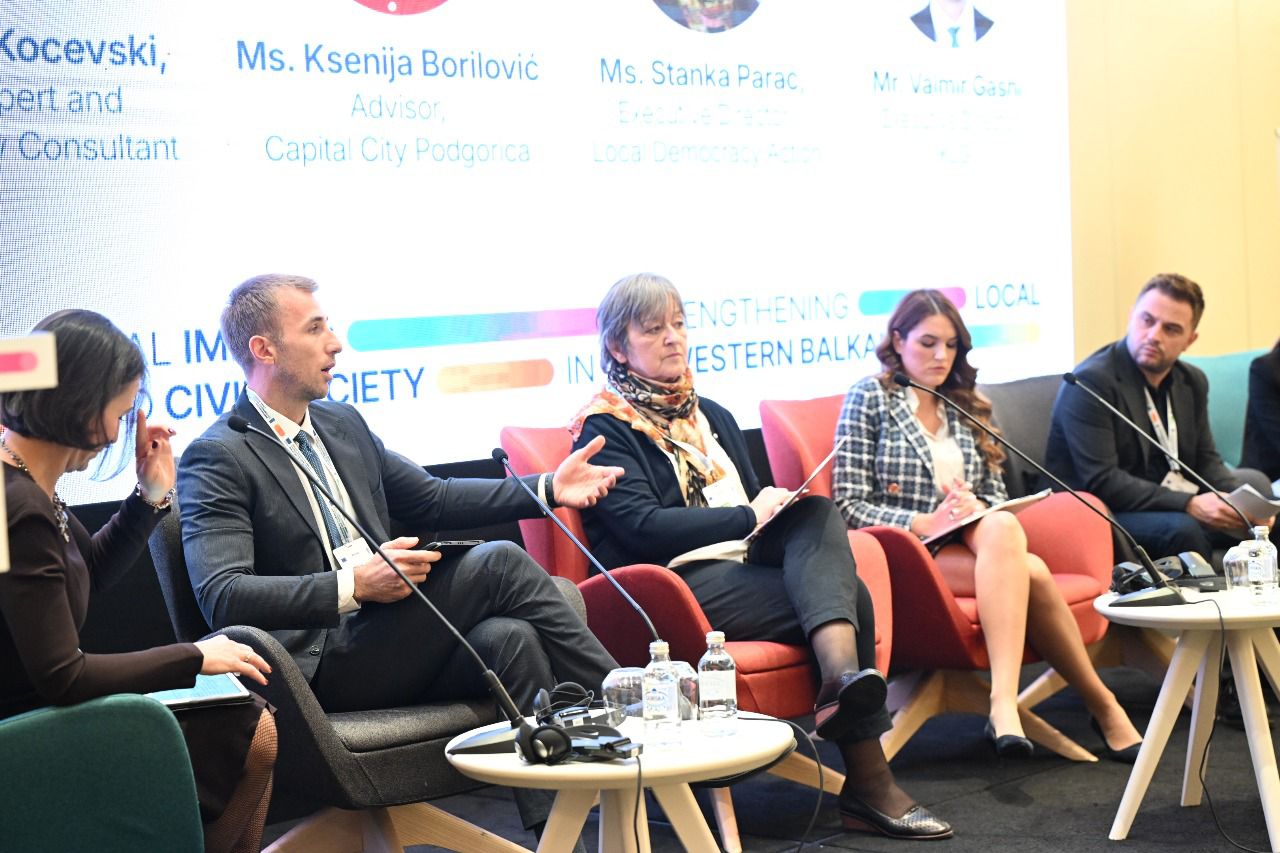
Consultative Committees and the Sub-municipal System of Local Government
Ohrid, Republic of Macedonia 09 – 11 October 2014 Lecturers: • Besnik Tahiri, MA in Local Governance and International Development • Begzad Sinani, Mayor – Kamenica • Bajrush Ymeri, Deputy Mayor – Novobërda • Agron…
Ohrid, Republic of Macedonia
09 – 11 October 2014
Lecturers:
• Besnik Tahiri, MA in Local Governance and International Development
• Begzad Sinani, Mayor – Kamenica
• Bajrush Ymeri, Deputy Mayor – Novobërda
• Agron Maxhuni, Legal Director – MLGA
Topics:
• Consultative Committees
• The Sub-municipal System of Local Government
• Obligations of Municipalities under Sectoral Laws
The citizen outside decision-making
Living in rural areas, more than half of Kosovo’s citizens are excluded from representation, consultation and decision-making, and in particular from access to services at municipal level. Although they ought to be a key instrument for drawing in local expertise, the presentations and discussions on consultative committees in the fourth module of the “Local Governance Academy – III” show that the committees are largely non-functional. Making these mechanisms functional, as well as the local councils, would be an important link in building a sustainable connection between political and civic representation and local expertise, which would result in better-quality policymaking.
Evidence from the Kosovo Local Government Institute’s data shows that so far the consultative committees in municipalities and the local councils represent only a formal aspect of meeting legal criteria, and do not serve the purpose of connecting with citizens, knowledge and sectoral expertise.
When one adds the fact that the municipality’s two mandatory meetings with citizens, as well as the public hearings on the budget, have turned into dry events devoid of substance, the fourth module concluded that public participation and representation in decision-making processes have turned into a meaningless “game”! The discussions and group work in this module produced the following recommendations:
The sub-municipal level should issue specific procedures for making local councils functional, which would have a budget for activities related to the democratisation of local governance;
Advisory consultative committees should be positioned as an important link in policymaking in the municipality;
Public consultations should become a platform for strategic and development direction, becoming an integral part of the entire policymaking cycle, from drafting to implementation.
Excluded Citizens
The opening remarks of this programme assessed that so far we have not managed to consolidate the system of local governance in a way that would enable citizens to be consulted, to participate and to be actively represented in decision-making.
As a consequence, on the one hand we have the dominant majority of citizens who are disconnected from and indifferent to municipal developments, while on the other hand only a small number of them are represented, and mainly through political party structures. It was also discussed that this political culture of sidelining, or excluding, the majority of citizens is the result of a mistaken approach in the process of consolidating democratisation, in which the beneficiaries of specialised democratisation programmes have mainly been citizens of urban areas.
Consequently, throughout this whole process we see that citizens receive few and poor-quality services, there is no civic activism in protecting and promoting the public interest and welfare and development projects, and governance lacks genuine political and civic legitimacy.
Taking as examples good Western experience, some good local practices and the experience of representatives in the field of local governance, the Kosovo Local Government Institute, through the “Local Governance Academy-III” programme, will address this topic and will produce specific findings and recommendations aimed at local democratic consolidation and the inclusion of citizens.
Begzad Sinani, Mayor – Kamenica: Every first attempt at representing villages brings problems of various kinds, but we have started this process. We have tried in the best way to find a modality in harmony with the applicable laws; we have had training and have drawn up regulations in this regard. In the Municipality of Kamenica there are 73 localities and 17 villages; we have dealt with decentralisation and in 2012 we amended the regulation. Despite this, citizen participation in the villages has been low and unsatisfactory.
In the election of local councils there was no participation; turnout was very low. For me as mayor, the priority is the mayor’s approach to the local councils. The chair of a local council is elected by procedure and approved in the Municipal Assembly; funding is provided through the municipality’s budget lines. Practice has shown that the municipal councils are important.
Bajrush Ymeri, Deputy Mayor – Novobërda: Thank you. We have similar problems; on this topic I would like to give some information from my own experience. Representation is important; we know how to be local. In 2012 we made the municipal councils functional; from 2002 to 2007 the municipality showed no interest in hearing the citizens’ voice. We have 25 councils out of 33 villages, with around 171 people involved in this process, a small allowance for the council chairs and one phone top-up a month. The establishment process was not easy. These councils have given us many good results; at one time their functioning was not easy, but now everything is in order.