Despite challenges, municipalities created through decentralisation have had an impact on local economic development
As part of the mentorships the KLGI Institute is providing to 14 municipalities with fewer than 22,000 inhabitants, a specific intervention arising from the project “Support for Strong and Sustainable Municipalities …
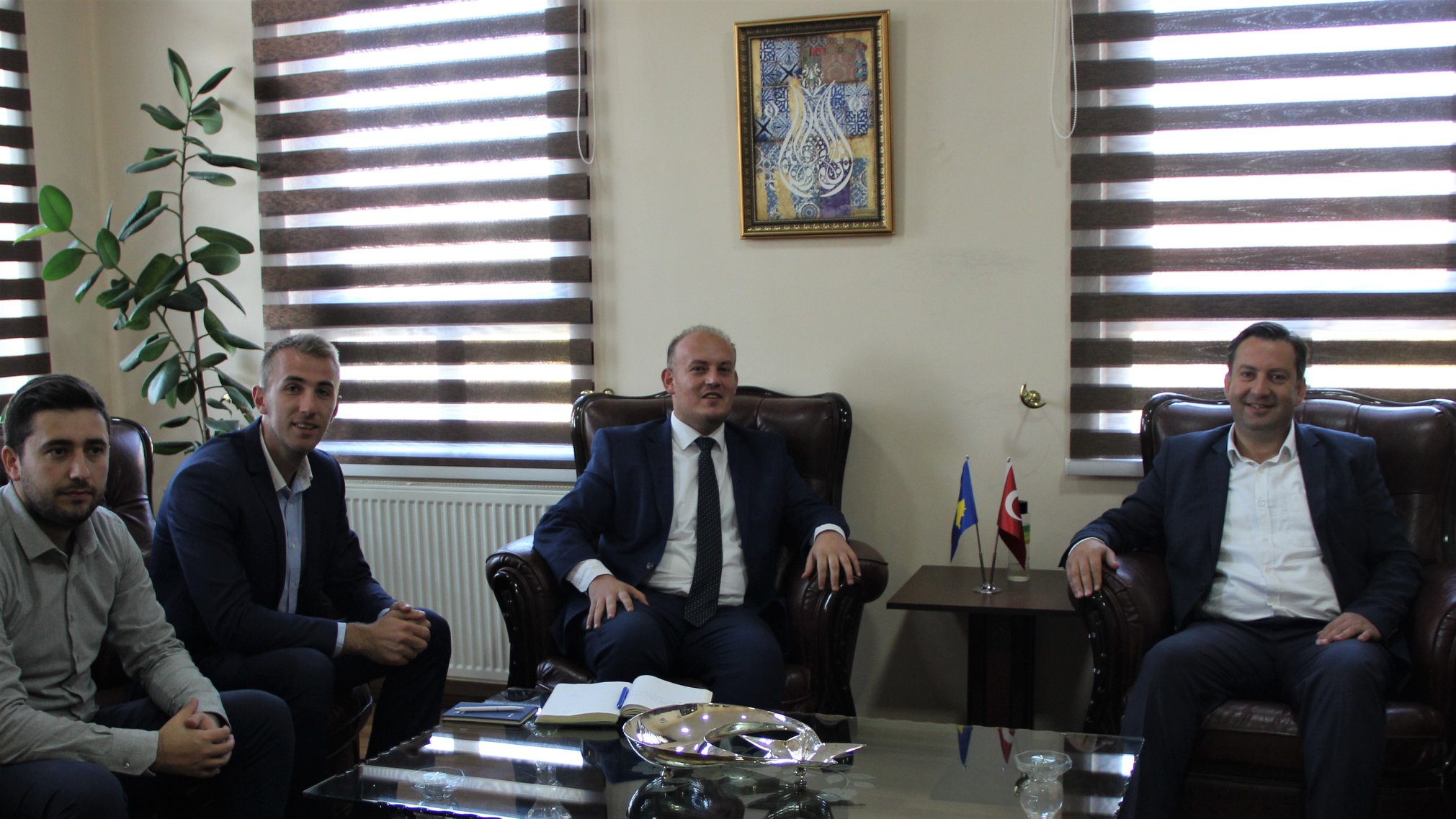
As part of the mentorships the KLGI Institute is providing to 14 municipalities with fewer than 22,000 inhabitants, a specific intervention arising from the project “Support for Strong and Sustainable Municipalities – SSSM” supported by the Royal Norwegian Embassy, representatives of the KLGI Institute visited the Municipality of Mamusha, where they were received by the mayor, Mr Abdulhadi Krasnic.
During the meeting, the Mayor of Mamusha, Mr Abdulhadi Krasnic, briefed the KLGI Institute representatives on the municipality’s challenges, progress and prospects. It was assessed that, 10 years after the decentralisation process, the Municipality of Mamusha has consolidated and opened a new perspective, not only for the integration of the Turkish community but also for development and governance.
The meeting discussed local economic development with an emphasis on agriculture, as this municipality is known to supply a considerable share of the Kosovo market with produce. Beyond this, some businesses from the municipality have been important suppliers of vehicle parts to the market.
Damage caused by flooding has proved a challenge for the municipality, although the central institutions have pledged support so that this group of people is not discouraged from their work.
In this context it is very important that the central institutions, in particular the Ministry of Environment and Spatial Planning, produce a sustainable solution to prevent the risk posed by the rivers in this municipality.
In service delivery, the municipality is continuing to consolidate its administration, while in health care it is very important that a Main Family Medicine Centre be provided. This would give it additional capacity, both professional and technical.
In education, Mayor Krasnic asked for increased staff support as well as joint efforts to raise quality. On this occasion Mayor Krasnic also mentioned the infrastructure projects that have received support from the central level, including public lighting, a temporary solution for drinking water and other infrastructure aspects.
The mayor spoke of increased communication between his municipality and the central government, not only in addressing challenges but also in finding sustainable solutions for its functioning.
There was a shared view that the central institutions should draft specific policies that respond to the context of municipalities, as in the case of Mamusha as a rural municipality. For his part, Mayor Krasnic spoke of the need to strengthen planning capacities so that the municipality can expand opportunities for investment, whether from the central level or from potential donors.
The KLGI Institute representatives pledged to continue supporting the municipality, whether in sectoral areas or in specific requests that arise during the cooperation. Congratulating the municipality on adopting its budget, they stressed the need to improve the consultation process further.
Finally, the challenge of and need for support in the area of transparency was addressed. As a shortcoming in this process, not only in this municipality but also in a number of small municipalities, problems have carried over down the chain: in the absence of an official logo, the KLGI Institute issued a report with a technical error in this municipality’s logo.
It is therefore very important that municipalities, through their information offices and together with the line ministries, address the need for uniform use of municipal logos, starting with the need for some municipalities that still do not have them on their websites or official social media profiles to put them in place. The problem has also spilled over into other official documents. At the same time, they should strengthen transparency and accountability by updating public documents on their websites.
This activity is carried out within the project “Support for Strong and Sustainable Municipalities (SSSM)”, funded by the Royal Norwegian Embassy in Kosovo.