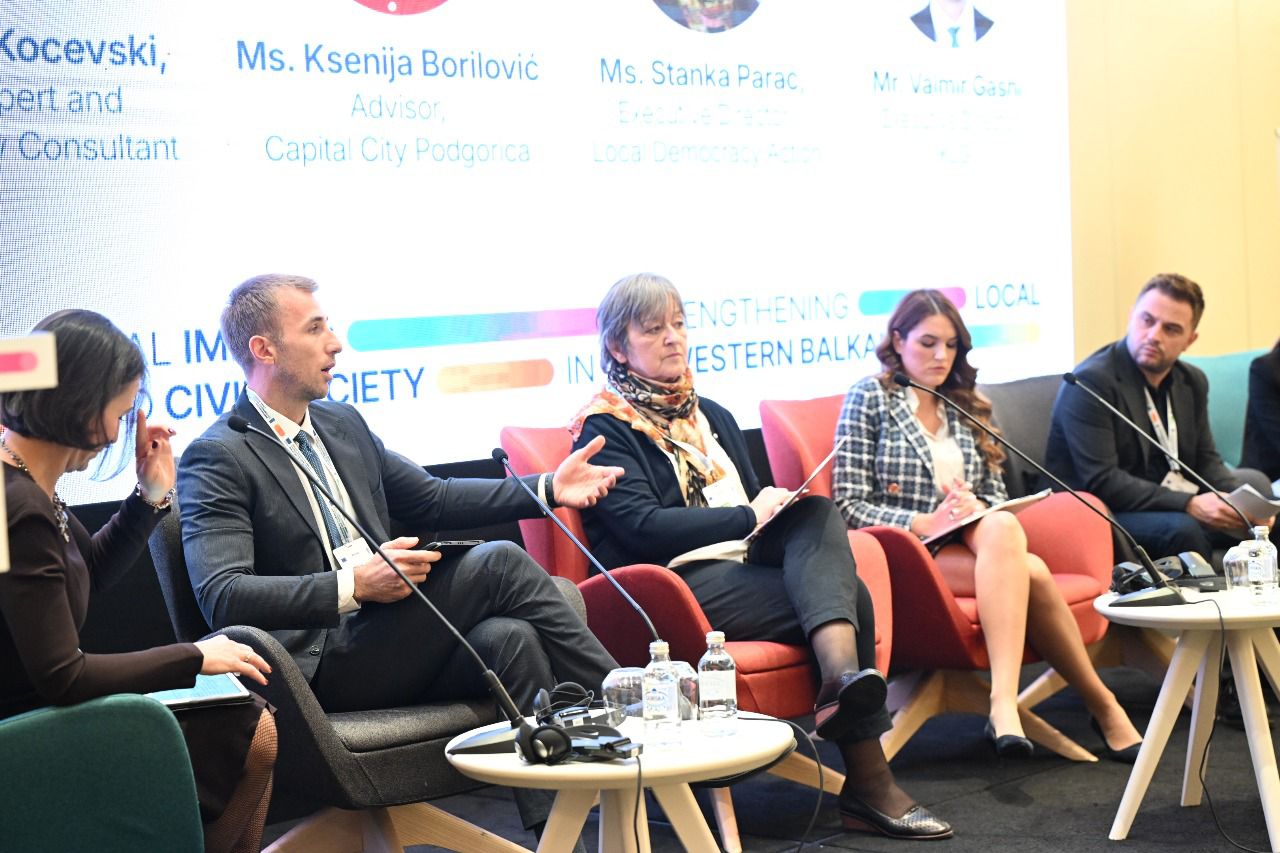
Director Gashi speaks at the launch of the analysis “Interaction between citizens and municipalities in times of crisis: a Covid-19 case study”
The Executive Director of the Kosovo Local Government Institute (KLGI), Valmir Gashi, was invited as a panellist at the launch of the public pulse analysis on “Interaction between citizens and municipalities in times of…
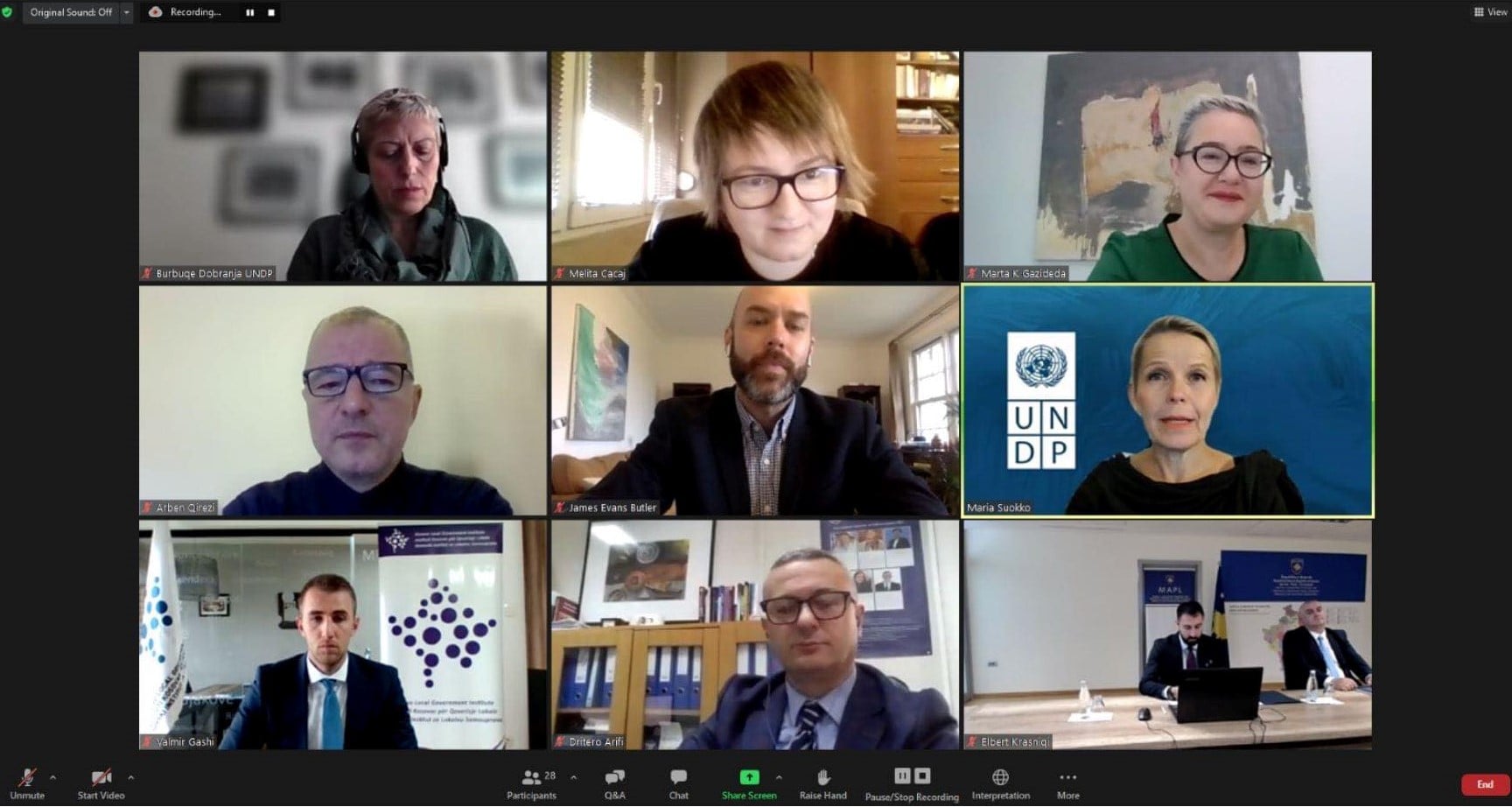
The Executive Director of the Kosovo Local Government Institute (KLGI), Valmir Gashi, was invited as a panellist at the launch of the public pulse analysis on “Interaction between citizens and municipalities in times of crisis: a Covid-19 case study”, organised by the United Nations Development Programme (UNDP) and the United States Agency for International Development (USAID).
During the virtual meeting, he gave a presentation on the topic “The effect of decentralisation on service delivery in times of crisis”, focusing on the extent to which municipal competences and capacities allow municipalities to cope with crises such as the Covid-19 pandemic.
Gashi stressed that the KLGI Institute has assessed the commitment of Kosovo’s municipalities in managing and operationalising COVID-19 prevention measures. During this period of dealing with the pandemic (COVID-19) and social isolation, Kosovo’s municipalities have coped well with the public health emergency.
It should be stressed that the decentralisation of services, not only as a principle of the European Charter of Local Self-Government but as a real instrument, has delivered lasting benefits such as: closer and faster management of demands and needs in such situations; better coordination and reach into every locality; less bureaucracy and real knowledge of the specifics of problems; the provision of assistance and support for hospital services and vaccination processes; and the post-pandemic recovery process.
The municipality thus remains the first-line provider of services and, at the same time, the most real instrument for understanding, implementing and responding, whether in ordinary or emergency situations. Support for the municipal agenda should therefore be strengthened, and it should rank higher in national policies.