Exclusion and fragmentation put cohesion and sustainable development at risk
The Kosovo Local Government Institute (KLGI) held a workshop on issues related to social services entitled “Improving the Quality of Social Services and National Objectives for Social Policy Development”. Participants…
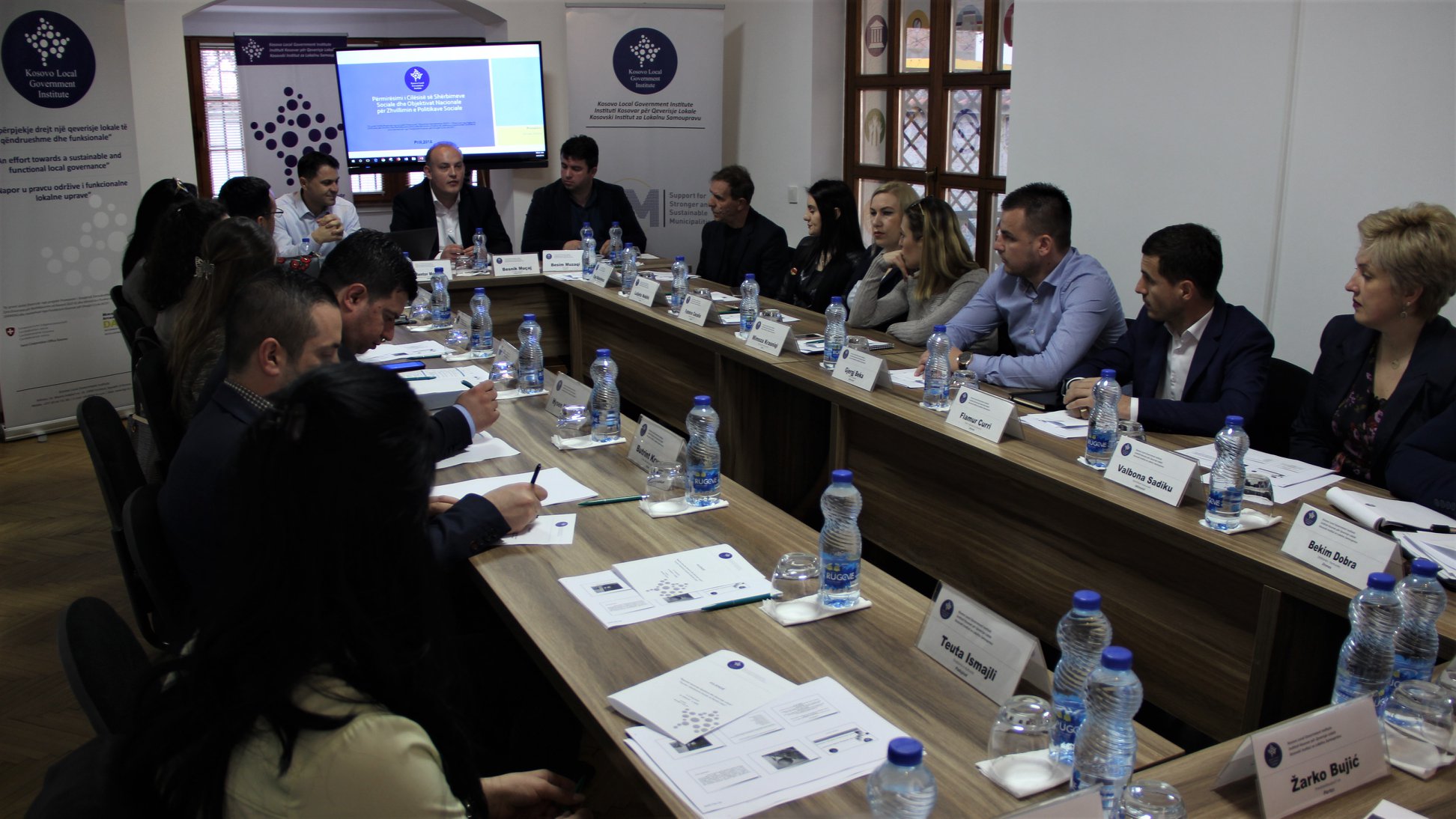
The Kosovo Local Government Institute (KLGI) held a workshop on issues related to social services entitled “Improving the Quality of Social Services and National Objectives for Social Policy Development”.
Participants in this event were officials from the municipalities of the Republic of Kosovo, who had the opportunity to converse, debate and gain knowledge through lectures given by the Head of the Social Welfare Division, Mentor Morina, and the Head of the Social Schemes Division, Fehmi Ibrahimi.
In the workshop sessions, the lecturers gave an overview of the challenges/problems, policies and vision in the field of social service delivery. It became clear that municipalities, namely the centres for social work and the other divisions that provide such services, are still challenged by this process. In order to draft the most sustainable policies possible, it is important to avoid ad hoc policies and at the same time to have awareness, cooperation and coordination among all actors.
The Acting Executive Director of the KLGI Institute, Besnik Muçaj, stressed that social inclusion directly affects the sustainable development of municipalities. If local institutions do not communicate and work together with central institutions, mechanisms that guarantee welfare and sustainable development in municipalities cannot be ensured. Countries that exclude, fragment and do not include individuals or groups in decision-making put their progress as a state and society at risk.
The Head of the Social Welfare Division, Mentor Morina, stressed that at local level there is no particular focus on priorities for social services. It is therefore of particular importance that Mayors, together with their structures, set some social services as priorities during their term of office.
The Head of the Social Schemes Division, Fehmi Ibrahimi, gave a presentation on social exclusion and inclusion in the Republic of Kosovo. Mr Ibrahimi stressed that if any individual or group is excluded because of their social, economic or political situation, it is the state’s responsibility to offer them opportunities for a life of well-being.
In the field of social services and welfare, multi-level and multi-dimensional challenges arise. The first relates to conflicting legislation, the second to policy fragmentation, the third to the lack of capacities and standards for service delivery, and the fourth to unsustainable funding. The shared conclusion was that separate segmentation for social issues, and a solution through a specific grant, would pave the way for sustainable solutions for the categories affected by social services and schemes.
This grant is funded by the Democratic Society Promotion (DSP) project – funded by the Swiss Agency for Development and Cooperation (SDC) and the Danish Ministry of Foreign Affairs (DANIDA) and managed by the Kosovar Civil Society Foundation (KCSF).