Investment projects become sustainable only when citizens are stakeholders
The Kosovo Local Government Institute (KLGI), in partnership with UN-Habitat, held the first session of the fifth (V) module of the Local Governance Academy educational programme. This module is being held on 12–13 May…
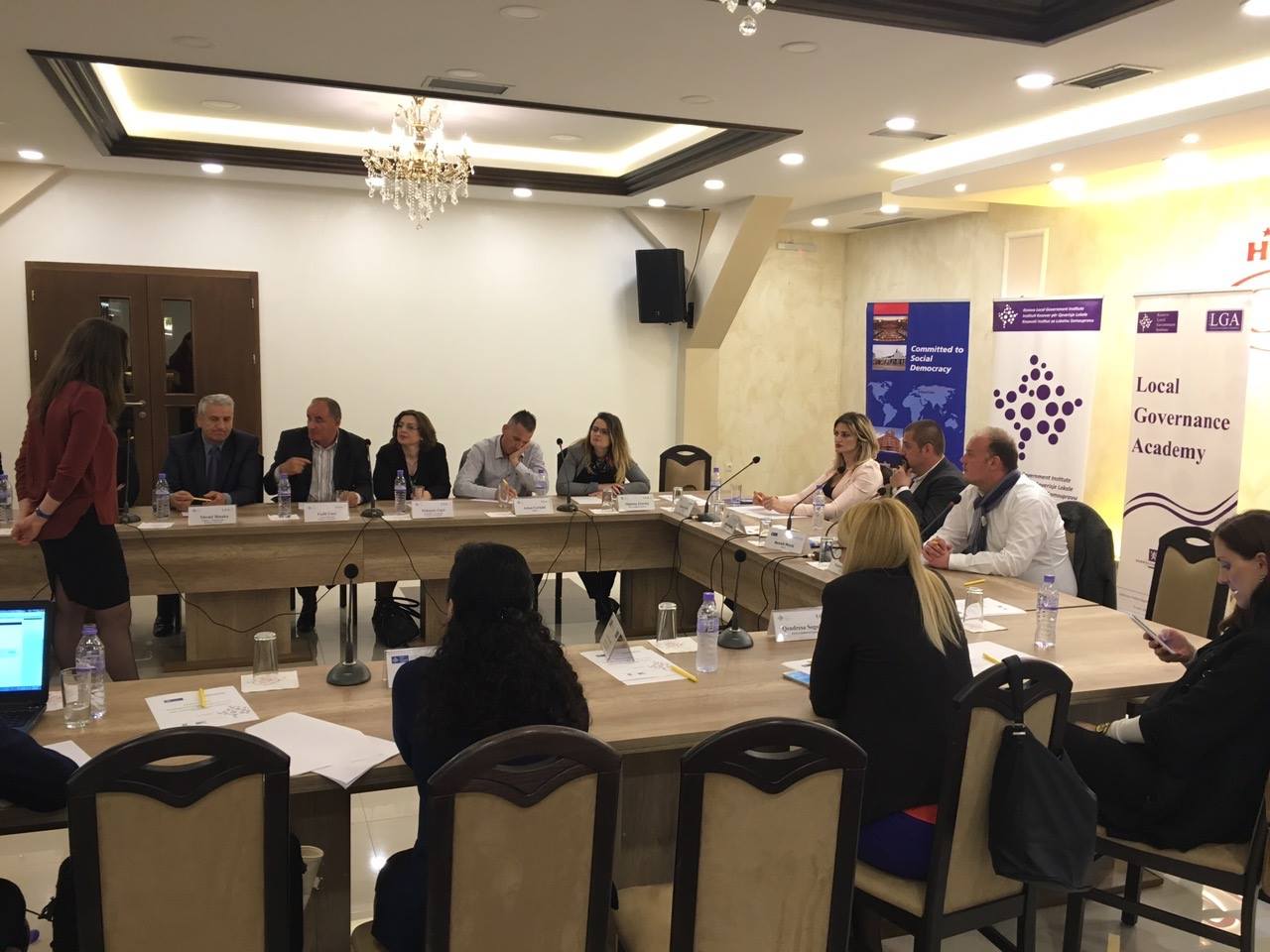
The Kosovo Local Government Institute (KLGI), in partnership with UN-Habitat, held the first session of the fifth (V) module of the Local Governance Academy educational programme.
This module is being held on 12–13 May 2016 (Thursday–Friday) at Hotel OK, Prizren. The module covers the topics: “Strategic Planning; Investment Plans and the Role of Society in the Democratisation of Municipalities”.
Opening the session, Mr Besnik Muçaj, Programme Manager at the KLGI Institute, stressed that this module is particularly important for municipalities and all other actors, because genuine, strategic, balanced, inclusive and integrated planning touches many sectoral areas and every dimension of life, from housing planning to strategic plans.
Ms Klodeta Krasniqi, a UN-Habitat official, first spoke about their engagement in helping municipalities and central institutions draft strategic investment plans, from the planning and consultation process through to implementation and impact measurement.
Ms Krasniqi placed particular emphasis on the process of consultation and the involvement of focus groups, residents and marginalised groups, from the design and formulation of projects through to implementation. She stressed that only by making citizens stakeholders can we have sustainable investment projects.
Speaking about the challenges of strategic and investment planning, Ms Krasniqi stressed that one of the main challenges in strategic and investment planning is building a bridge between institutions. Very often, in important processes, the link from the central to the local level is very important, since all actions are reflected at a single level.
Mr Vigan Perani, a UN-Habitat official, spoke about the organisational and operational process of implementing capital projects. He stressed that the process of consultation and inclusiveness, besides contributing to the functionality of investments, also indirectly develops local democracy.
Involving focus groups and professionals addresses different needs and priorities, produces appropriate and innovative results, and increases the usability and sustainability of the project.
In its second session, the fifth LGA module will address the role of civil society in the democratisation of municipalities.
The programme is supported by the Friedrich Ebert Stiftung foundation.