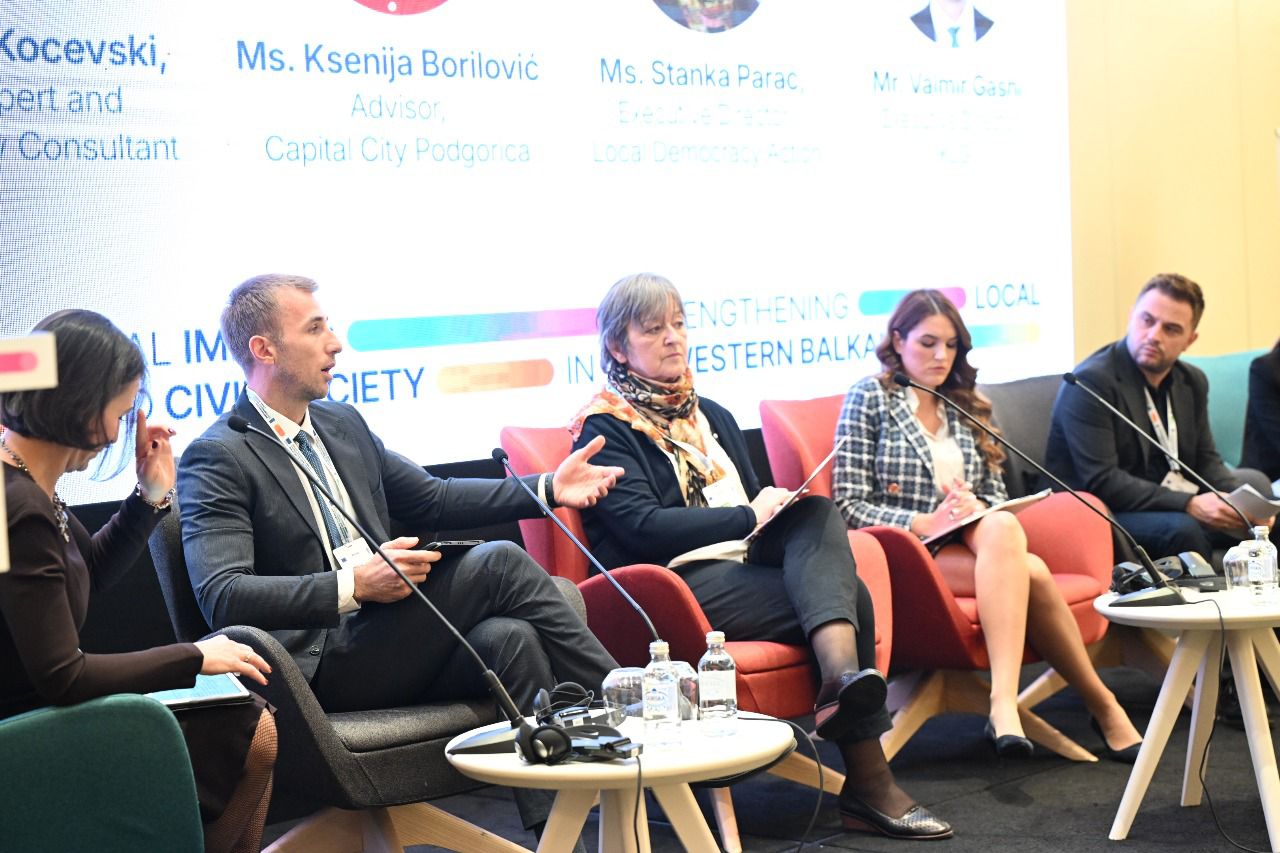
Opening of the Democratisation and Decentralisation Academy
Venue: Hotel Harmonia, Republic of Albania Date: 1–4 November 2012 Lecturers: Prof. Neritan Sejamini, Master of Science from George Washington University, Washington DC, and former adviser to the Prime Minister of the…
Venue: Hotel Harmonia, Republic of Albania
Date:1–4 November 2012
Lecturers:
Prof. Neritan Sejamini, Master of Science from George Washington University, Washington DC, and former adviser to the Prime Minister of the Republic of Albania
Erion Veliaj, Master of Science from the University of Sussex, UK
Former founder of the MJAFT movement and former head of G-99|
Besnik Tahiri, Master of Science in Decentralised Governance and International Development
Besnik Osmani, Master of Science – American University in Kosovo, Secretary of the Ministry of Local Government
Fatmir Haxholli, Master of Contemporary European Studies
Agron Maxhuni , Legal Director, Ministry of Local Government
Topics:
• Decentralisation from a historical, academic and research perspective – The International Context of Local Governance and the Development of Local Government
• Fundamental Concepts of Decentralisation: Devolution, Deconcentration and Administrative Decentralisation – Rondinelli’s Principles
• Democratisation in Relation to Decentralisation – The Case of Kosovo – Presentation of the Kosovo Local Government Institute’s Publications
Publications
• Public Choice Theory – Governance, Institutions and Democracy
• Democracy and the Active Participation of Citizens in Society – Civil Society, Institutions and Political Parties
• State-Building in Relation to Decentralisation – The Case of the Republic of Kosovo
• Organisation and Functioning of Local Government in Kosovo – The Legal Basis for its Organisation and Functioning
Local government reforms: a precondition for European integration
The Kosovo Local Government Institute held a ceremony to mark the official opening of the Local Governance Academy – Second Generation. The ceremony and opening took place in Golem, Republic of Albania, from 1 to 4 November 2012.
Through the Local Governance Academy, the Kosovo Local Government Institute is offering a genuine and substantive educational programme in the field of local governance in Kosovo. Nominees from five municipalities (Kamenica, Vushtrri, Deçan, Kllokot and Fushë Kosova) make up the second generation of this programme, and they also include a number of officials from the North Mitrovica administrative office. Participants include senior municipal officials (deputy mayors and directors) as well as chairpersons of Municipal Assemblies.
At the opening of the programme, the Executive Director of the Kosovo Local Government Institute, Mr Besnik Tahiri, stressed that the programme rests on 4 key elements: 1. findings from KLGI’s research and periodic work; 2. the assessment of municipalities’ capacity-building needs; 3. methodological and professional support from the University of Birmingham; and 4. the expertise of international, local and regional lecturers. According to Mr Tahiri, this will make it possible to combine regional practices and international theories on local government with current developments, including Kosovo’s present needs.
Elaborating on the theories in ‘Theoretical Concepts of Decentralisation’, Mr Tahiri stressed that before a society pursues a policy of decentralisation, there must be at least three preconditions in place:
The first is a high level of central state capacity. Because effective implementation of decentralisation requires coordination between levels and more regulation to guarantee basic transparency and accountability, a weak state cannot implement decentralisation successfully. The second requirement is a well-developed civil society. This matters not only for participation, but also because it can provide additional sources of information and feedback, as well as constructive criticism of local government. The third is a political project in which an organised political force supports decentralisation and ensures its implementation. We should also not forget that effective local governance depends on existing resources that are adequate and sustainable.
In his presentation on “Public Choice Theory”, Professor Neritan Sejamini explained the role of this theory in analysing and studying political processes and actors, and its importance for making the right policy choices in the public interest (morally and economically) and for improving the organisational side (management of information and structure). Analysing the notion of ‘Good Governance’, Prof. Sejamini stressed that much work remains to be done to achieve good governance with clear transparency and accountability.
On another topic, in his presentation “Democracy and the active participation of citizens in society”, Mr Erion Veliaj elaborated on the role of active societies in relation to institutional mechanisms in driving processes forward and improving citizens’ lives. He also said that institutions often lack vision, but that this vision must come from other actors who are active in policy-making and decision-making.
During this module, the topic of state-building in relation to decentralisation was discussed. On this topic, the Secretary General of the Ministry of Local Government Administration focused on elaborating the dimensions of: the Organisation and Functioning of Local Self-Government in the Republic of Kosovo; and the Role of Municipalities in the European Integration Process.
The Local Governance Academy will continue its work with the next session, scheduled to be held at the end of November. The general impression among LGA participants was that this programme will help improve local governance in general, and strengthen institutional capacities in particular.