Property, the main pillar of progress
The Austrian Chamber of Commerce in Kosovo, the Kosovo Local Government Institute, UBT College and the Municipality of Lipjan organised a conference addressing five dimensions of the use of municipal land: (Housing …
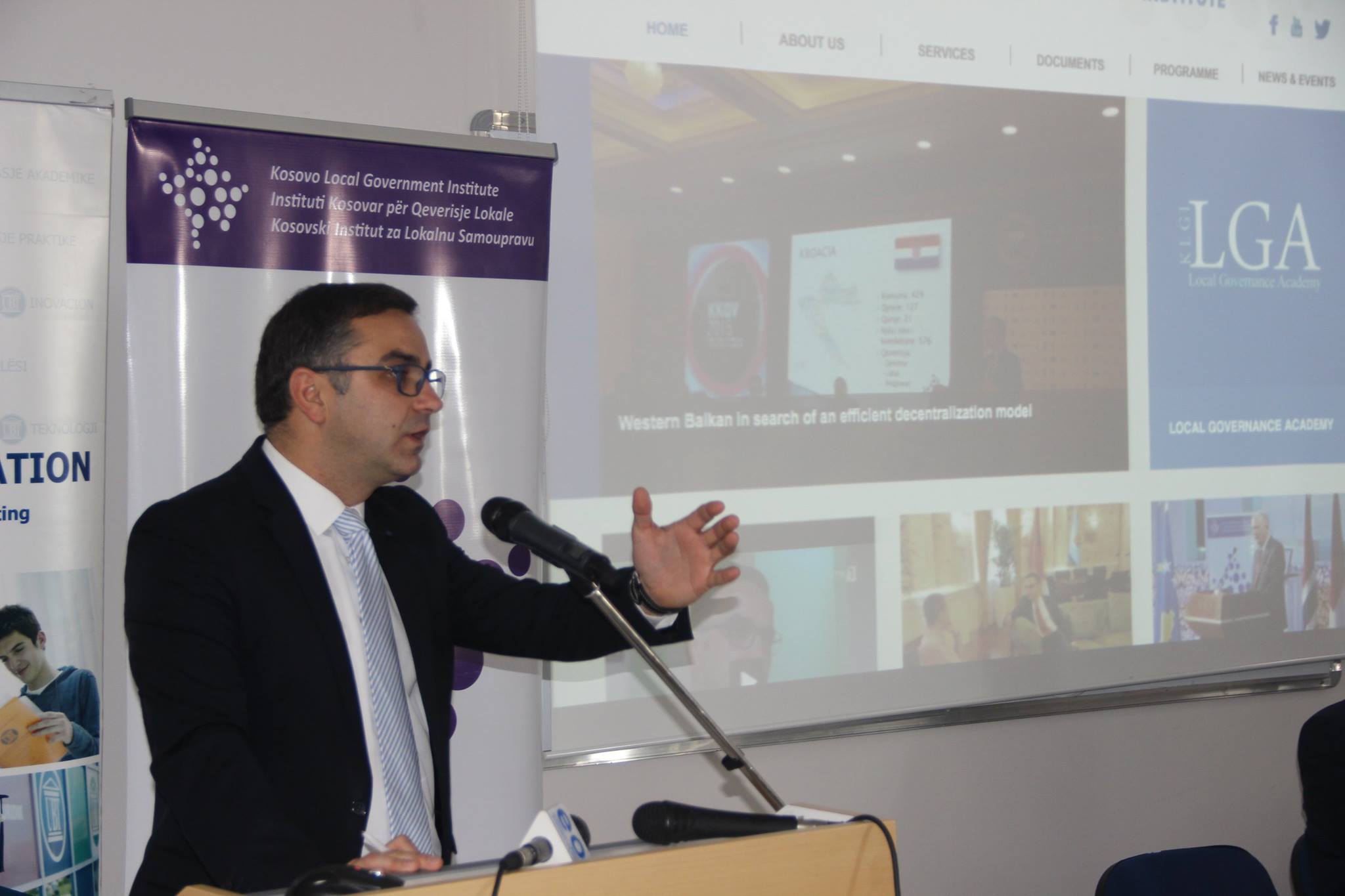
The Austrian Chamber of Commerce in Kosovo, the Kosovo Local Government Institute, UBT College and the Municipality of Lipjan organised a conference addressing five dimensions of the use of municipal land: (Housing – Agriculture – Tourism – Industry – Infrastructure).
In his speech, Mr Besnik Tahiri, Executive Director of the KLGI Institute, stressed that property is the main pillar of a country’s progress. So without full clarity on property, and without accurate management of public property, there is no economic development. It is known that Kosovo’s Municipalities have very little municipal property, which means that public-private projects are very lacking in the country. So Kosovo, and especially its Municipalities, have faced and continue to face this problem, given that property and the cadastre have gone through an almost unclear process of ownership and management. Initially the problem arose from the lack of cadastral registers in municipalities, the transfer of properties into the ownership of the KPA, and the granting of permits for use and exploitation and the designation of property by the central level; later, property problems also carried over into decentralisation, in the process of forming new municipalities in relation to their parent municipalities.
The focus of municipalities should be on rationalising usable land and increasing transparency, the management plan, the integration of technology and its role in managing municipal land. This is given that Municipalities still face a lack of management of municipal property for administrative and educational buildings, let alone leasing it out for economic development. And even where municipalities have identified properties that are under the management of the KPA, the procedures for exchanging them are extremely complicated.
So good management of municipal assets should be based on a well-balanced division of authority, responsibility and accountability between central and local government, and on good policies. In Kosovo this balance has not yet been achieved, and existing policy and the regulatory environment hinder a long-term strategic approach to managing land and assets at local level and, in particular, the use of land and property for local economic development and revenue generation. Municipal public immovable property is a very important municipal asset that affects local economic development and facilitates the exercise of municipal competences. Municipal property should be at the service of serious investors whose concrete projects would generate budget revenue and new jobs.