Vushtrri, a test of new leadership at the local level
As part of its meetings with local leadership, representatives of the KLGI Institute were received by the mayor of the Municipality of Vushtrri, Mr Xhafer Tahiri, the deputy mayor, Mr Besim Muzaqi, and the Chair of the…
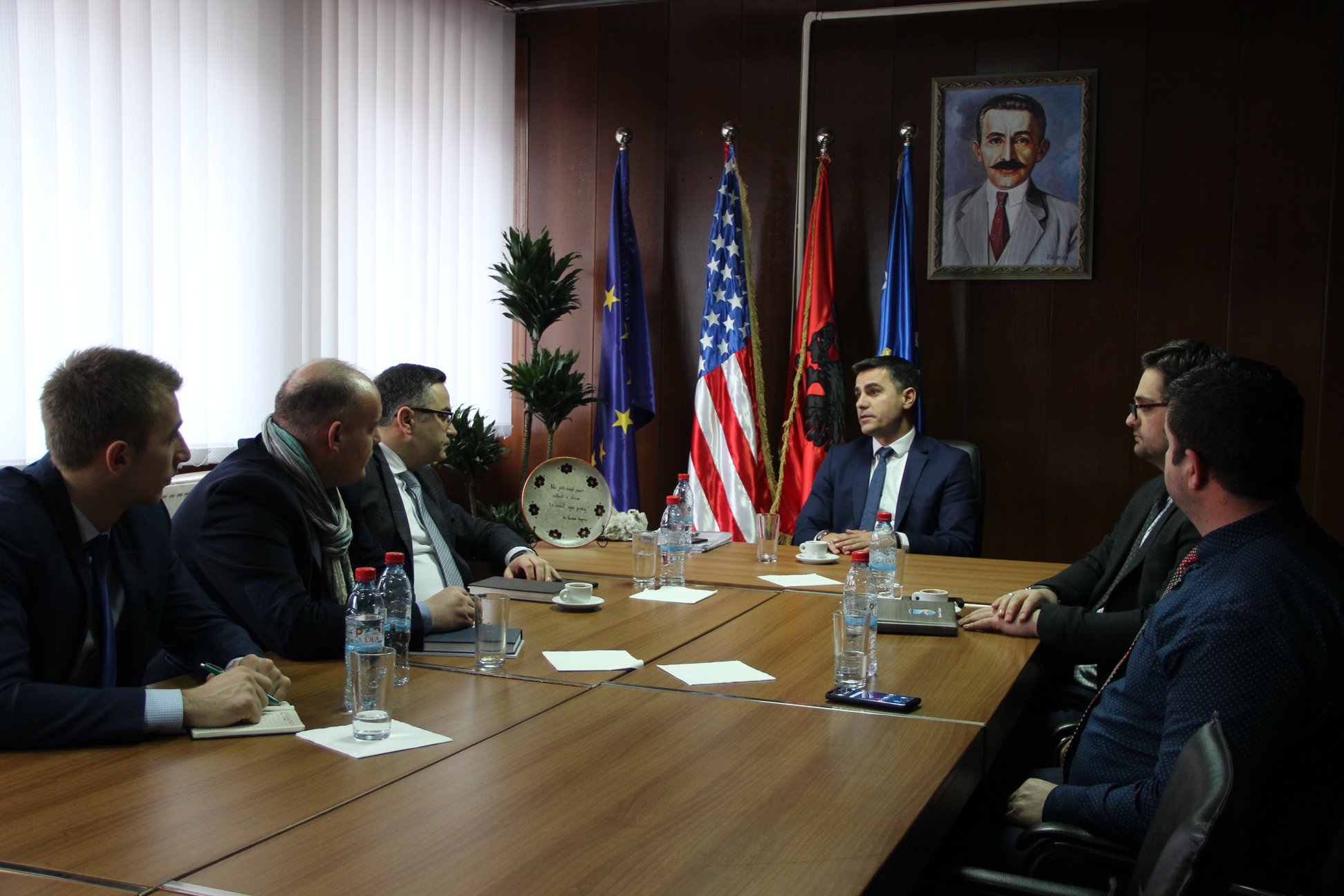
As part of its meetings with local leadership, representatives of the KLGI Institute were received by the mayor of the Municipality of Vushtrri, Mr Xhafer Tahiri, the deputy mayor, Mr Besim Muzaqi, and the Chair of the Municipal Assembly, Mr Nasuf Aliu.
At this meeting, Mr Tahiri first congratulated the new leadership on its strong spirit of teamwork and cooperation, given that the coalition in this municipality represents a distinctive model of overcoming political differences in order to develop transformational leadership in municipalities.
At the outset, Tahiri stressed that the Municipality of Vushtrri can offer municipalities a new example of how cooperation and a shared vision can strengthen democracy at the local level. Beyond this, it is also a very great obligation that this leadership has taken on, not only to represent the parties but, above all, to promote the model of a new culture of governance. This will be a test and, at the same time, a path for figures with a background in central-level politics to represent the local level and face its challenges.
The representatives of the KLGI Institute pledged that, in addition to the areas covered by the SSSM project, it is essential to design, together with partners and donors, a new approach to supporting municipalities, aimed at drafting a transformative agenda that moves from administering services to governance that is more development-oriented and focused on achieving strategic objectives.
To this end, the KLGI Institute, together with municipalities, in meetings with both political and sectoral representatives, is working on drafting a platform that will set strategic aims for the local level in the new decade that lies ahead after decentralisation. This is intended not only as a mechanism to help municipalities but, above all, as a redesign and aim of the country in strengthening European foundations at the local level. There must also be complete clarity here between the political level, in providing the vision, and that of civil servants or the structural level.
In this regard, several key issues arise: first, the focus of central institutions must largely be turned towards the development of this level, through policies, legislation and funding, while the local level should at the same time set new standards in democratisation, sustainable development, social cohesion and service delivery. A new planning approach should not be forgotten here either, given that municipalities have already reached a certain stage of infrastructure development.
Therefore, opening new paths for investment in development master plans would avoid the fragmentation of policies and budgets and would at the same time focus on the sustainable development of the planned areas. Polycentric development, urban aesthetics and innovation in the development of policies and projects should also be taken into account here.