A functional public administration, a precondition for democratic and transparent governance
The Kosovo Local Government Institute (KLGI) held a workshop on “The role of public administration in the delivery of municipal services”. The workshop was held within the framework of the programme “An effort towards…
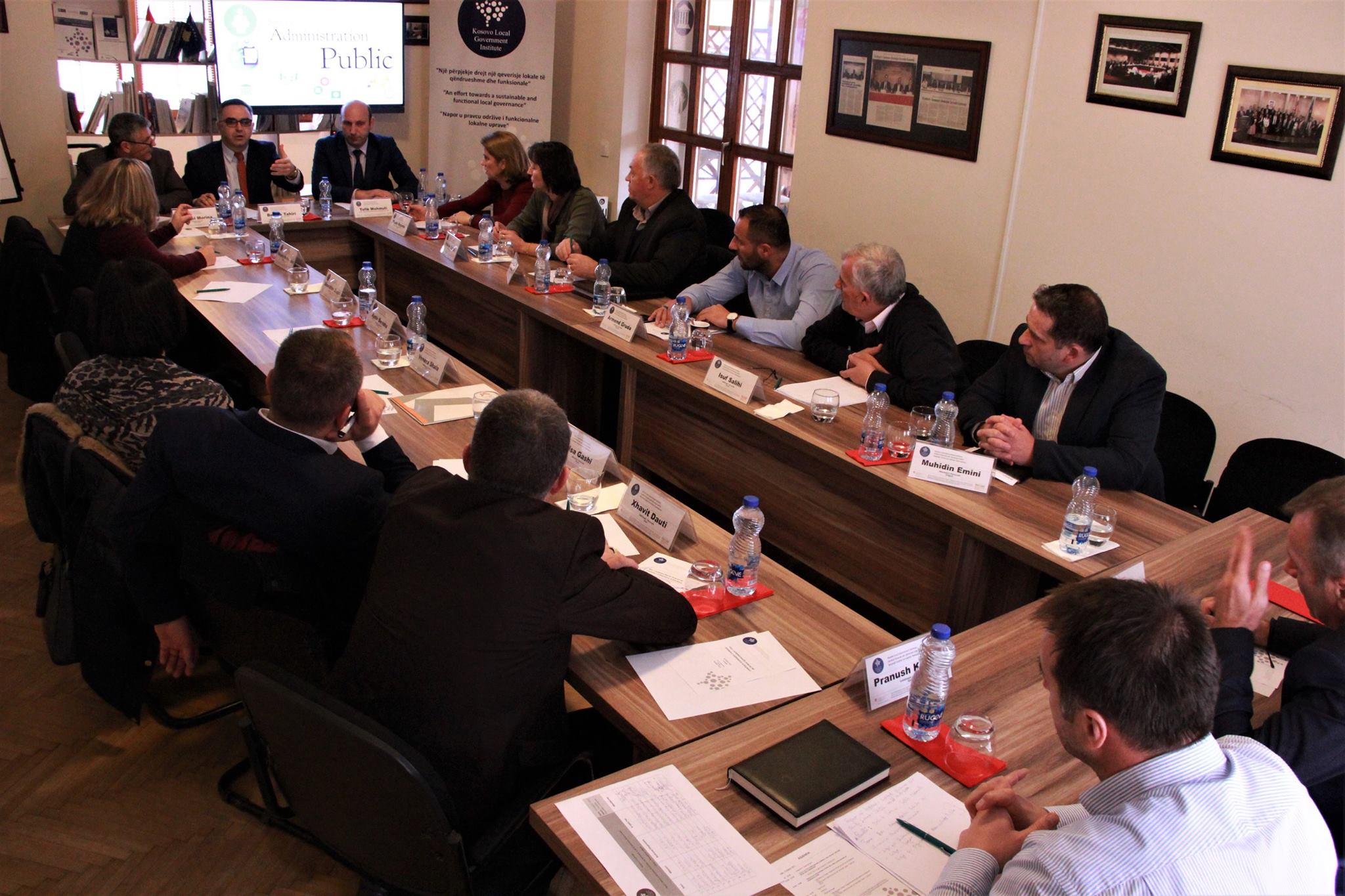
The Kosovo Local Government Institute (KLGI) held a workshop on “The role of public administration in the delivery of municipal services”. The workshop was held within the framework of the programme “An effort towards sustainable and functional local governance”, under whose pillar ‘Increasing Municipal Performance’ the KLGI Institute is offering a set of tools in support of the efficiency and effectiveness of municipal administration. The participants in this activity were heads of personnel from the local level in Kosovo.
The purpose of the workshop was to build the capacities of municipal officials in step with new trends in public service delivery, such as one-stop shops, e-services and integrated services. Topics were also addressed that essentially highlight the need for intervention and improvement in functional sectors at the local level, from sustainable planning and a clear division of responsibilities to accountability and evaluation.
Opening the workshop, the Executive Director of the KLGI Institute, Mr Besnik Tahiri, spoke about the functioning of public administration, citing experiences and good practices such as one-stop shops and full service delivery in integrated centres from countries in the region. This is because in Kosovo the administration faces problems, including confusion, non-merit-based promotion, political interference and interdependence in service delivery.
Practices that promote good governance therefore make it possible to create an accountable, digitalised administration that is accessible and transparent. Through the standardisation of services and reform, Tahiri stressed, the administration must become a facilitator of the country’s development.
The Director of the Department of Civil Service Administration at the Ministry of Public Administration, Mr Tefik Mahmuti, spoke about the problems that have arisen with laws, with emphasis on the Law on Salaries, the Law on Civil Servants and the Law on the Organisation of the Administration. Mr Mahmuti informed participants that the Ministry of Public Administration (MPA) is in the process of preparing a new law defining the responsibilities of employees. This is because it is essential to make a clear division between the exclusive competences of the local and central levels.
After the presentations, the workshop continued with a joint substantive discussion, where it was agreed that this group would continue addressing these issues together with the KLGI Institute in the process of drafting the administration reform laws. This will also include examining models and regional visits.
Four issues were addressed in working groups: i) the areas that should be covered by the reform; ii) the approach to reorganising municipal sectors; iii) the process of deconcentrating services and integrated service delivery; and iv) the contracting of services, joint administration and performance measurement.
There was common agreement that legislation should be drafted on the principles of a functional public administration, which is a precondition for democratic, transparent and accountable governance. This would strengthen the foundations of the functioning of the state, determining the government’s ability to deliver public services and to cultivate sustainable development and the principles of good governance.
“This grant is funded by the Democratic Society Promotion (DSP) project – funded by the Swiss Cooperation Office in Kosovo (SCO-K) and the Ministry of Foreign Affairs of Denmark (DANIDA) and managed by the Kosovar Civil Society Foundation (KCSF)”.