Clientelism, a worrying phenomenon for Kosovo
Clientelism is a worrying phenomenon for local and central government in Kosovo. Indeed, in some cases it can be described as more dangerous than corruption for the normal functioning of the state. This was stressed by…
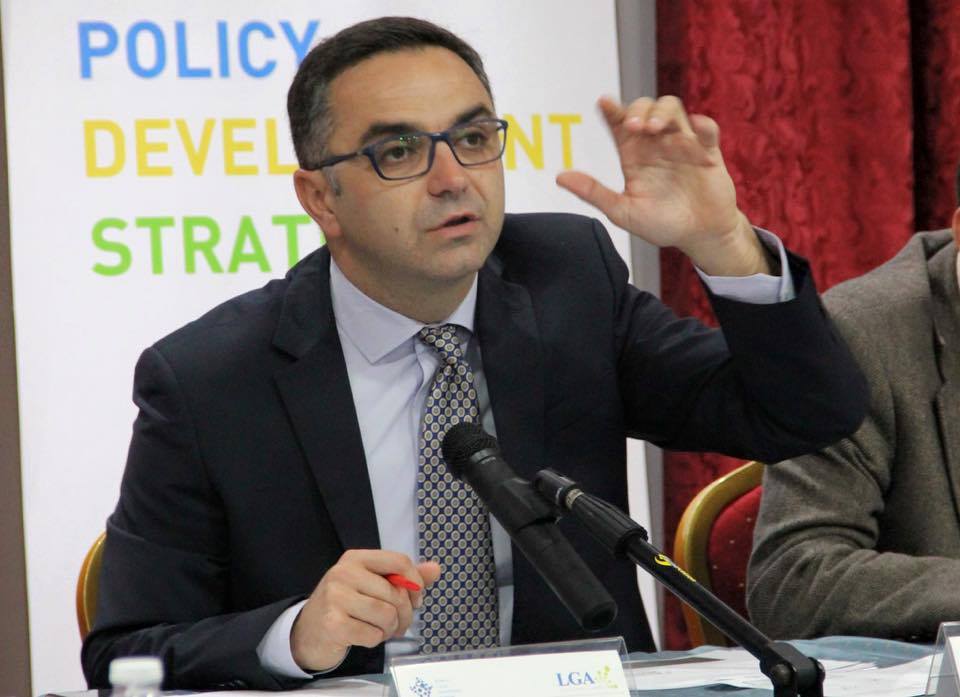
Clientelism is a worrying phenomenon for local and central government in Kosovo. Indeed, in some cases it can be described as more dangerous than corruption for the normal functioning of the state. This was stressed by Besnik Tahiri, Executive Director of the Kosovo Local Government Institute, during the Third Module of the Local Governance Academy, which was held in Durrës over three consecutive days and attended by representatives of several municipalities, officials of the Auditor General and civil society representatives.
Among other things, Tahiri stressed that rules alone are not enough to combat clientelism. “Civil society and the media must also play a major role in this regard. We have examples from countries such as Croatia, where these two segments played a very large role in this state joining the European Union”, Tahiri stressed.
On this occasion, the Executive Director of KLGI, Besnik Tahiri, also presented research by this institute on the installation of clientelism in our country. According to this research, the conclusion reached is that “clientelism in Kosovo has turned into an alternative form of governance”.
In the third module, entitled “Public Policy Formulation and Local Economic Development”, a contribution was also made by the Legal Director of the Ministry of Local Government Administration, Agron Maxhuni, who presented the legal framework for the organisation and functioning of Local Government. Maxhuni highlighted inter-municipal cooperation as very important for the functioning of Local Government.
Meanwhile, the European integration expert Fatmir Haxholli explained to the participants of the Local Governance Academy the great importance of municipal development strategies.
Haxholli focused on the major role played by the way a strategy is drafted and how it is implemented in practice. “If a strategy remains only on paper and is not implementable, its effect will be zero. It will simply be a waste of time and energy and an improper use of human resources, which also has budgetary implications”, Haxholli stressed.
For his part, the economics expert and Executive Director of “Besa Consullting”, Bajram Fusha, explained the role municipalities play in economic development and in Free Economic Zones.
“Kosovo has no free economic zones. Although the Government decided to declare Free Economic Zones, such as Gjakova and Mitrovica, they cannot be called such zones”, he stressed.
The third module of the Local Governance Academy, organised by the Kosovo Local Government Institute, was held in Durrës from 19 to 21 November.