Internal financial control raises the standards of expenditure planning at the local level
The KLGI Institute held a training session on “Building the capacity of internal audit offices for monitoring, evaluation and advice”, which brought together municipal and central-level stakeholders to address the…
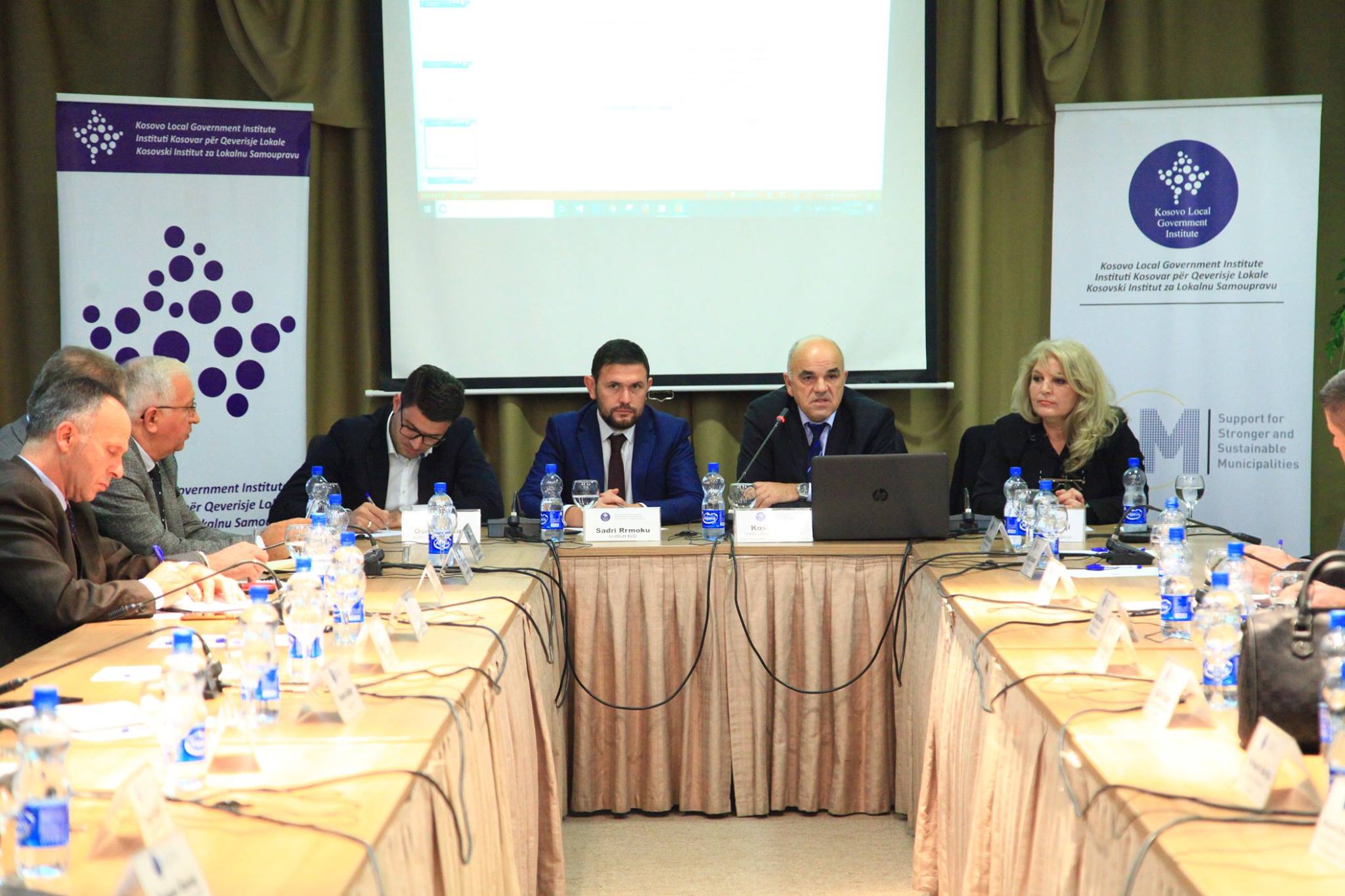
The KLGI Institute held a training session on “Building the capacity of internal audit offices for monitoring, evaluation and advice”, which brought together municipal and central-level stakeholders to address the challenges and opportunities in improving the internal audit process.
Participants in this session were Internal Auditors from all municipalities of the Republic of Kosovo, the National Audit Office and representatives of civil society. Furthermore, the training session focused on internal audit offices with the aim of promoting their role, improving communication and familiarising participants with international standards for the professional practice of internal auditing.
The workshop served to support internal audit offices in improving the processes of oversight, control and recommendation in order to raise audit standards.
In this regard, opening the session, Mr Sadri Rrmoku of the KLGI Institute stressed that municipalities, and mayors in particular, must commit strongly to establishing audit committees and making them functional, and to empowering internal auditors as signallers and preventers of procedural and legal violations in financial matters.
Meanwhile, strategic plans and action plans should be a process of continuous consultation and analysis by audit committees and auditors. Internal control should, above all, in the process improve, address and raise the standards of how money is spent in relation to the processes taking place in municipalities. The aim is therefore that, by setting out the problems faced by municipalities, concrete recommendations emerge to facilitate and improve the internal financial control process.
The Director of the Central Harmonisation Department at the Ministry of Finance, Mr Kosum Aliu, spoke about quality assurance in internal audit, stressing that reforms are being undertaken in the field of public finance with the objective of bringing Kosovo's public internal financial control system closer to the European Union, best practices and international standards, in order to improve managerial accountability in public sector organisations and increase the transparency of how taxpayers' money is spent.
The key objectives of the Ministry of Finance have focused on capacity building from three aspects: capacity building from the legislative aspect – managerial accountability; capacity building from the structural aspect; and capacity building in terms of raising the quality of internal auditors' work, with the aim of providing quality services and value to management.
This activity was organised as a continuation of the KLGI Institute's activities in the service of municipalities to advance financial management, above all financial planning at the local level, execution, local economic development and the strategic planning being undertaken within municipalities. The KLGI Institute and the stakeholders agreed on the need to broaden consultations through a joint forum in this field.
This activity is being carried out within the project ‘Support for Stronger and More Sustainable Municipalities (SSSM)’, funded by the Royal Norwegian Embassy in Kosovo.