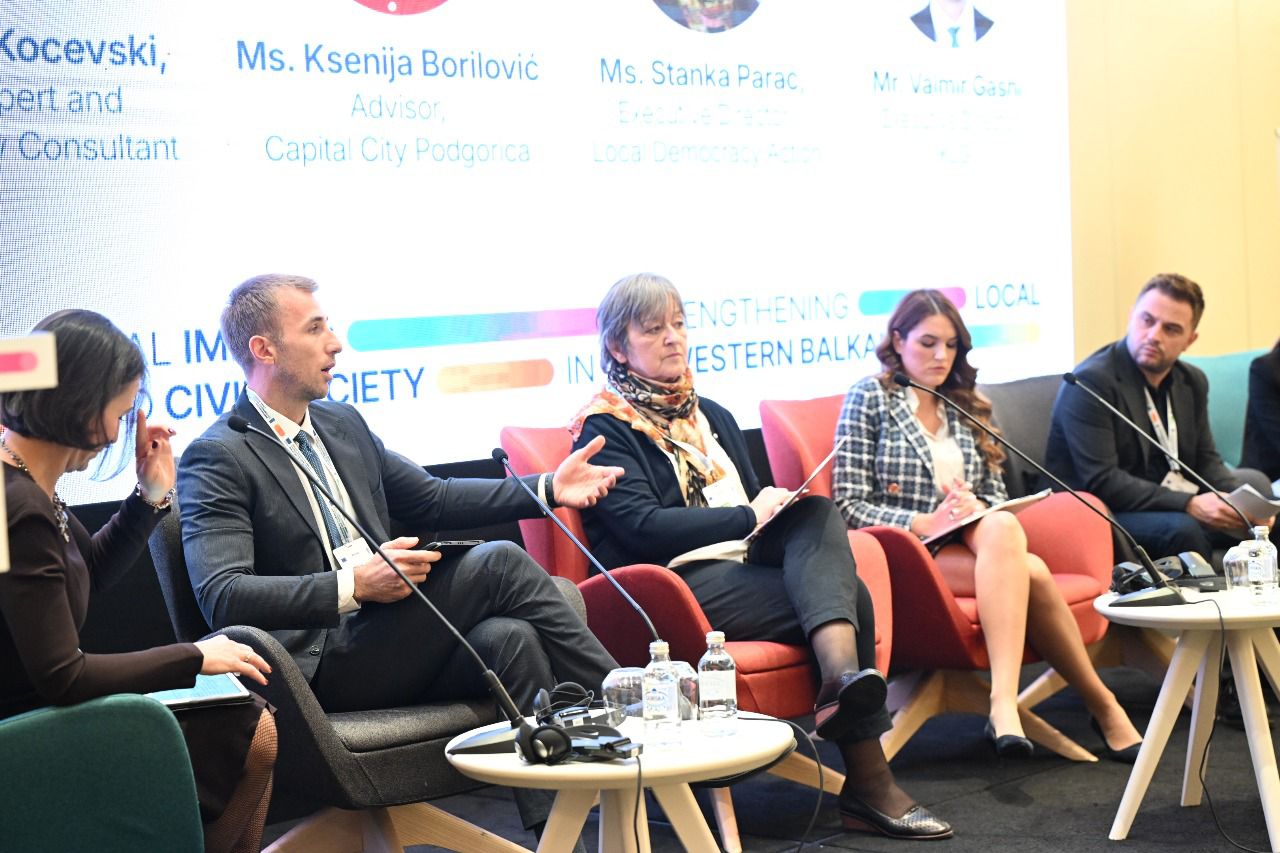
KLGI held the fourth module of the educational programme “Local Governance Academy”
This module covered the topics “Public policy, its drafting and implementation at local level” and “Local democracy”, with lecturers Andy Johnston, director at the Local Government Information Unit – LGiU, Besnik…
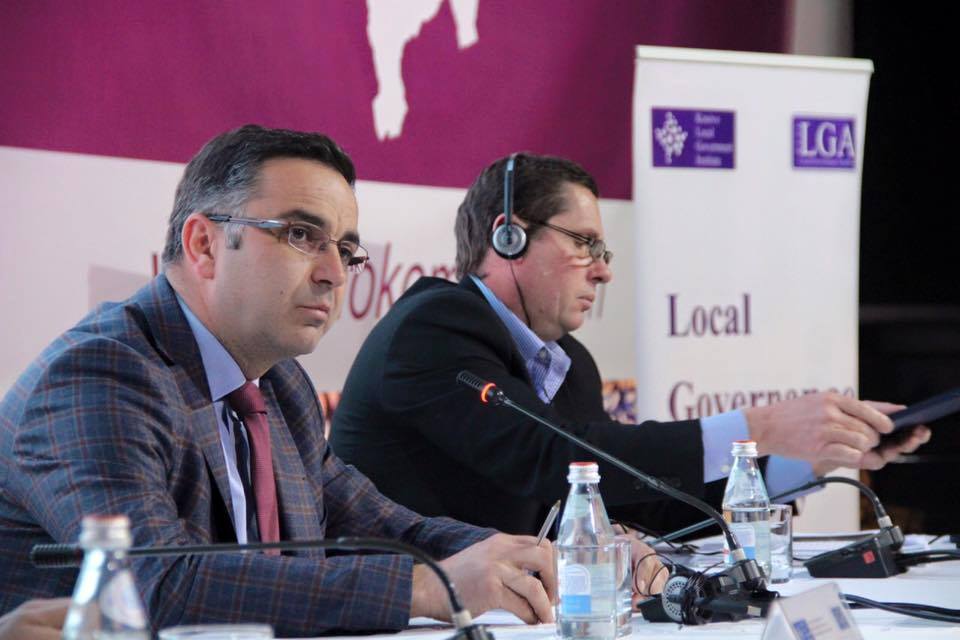
This module covered the topics “Public policy, its drafting and implementation at local level” and “Local democracy”, with lecturers Andy Johnston, director at the Local Government Information Unit – LGiU, Besnik Tahiri, Executive Director of the KLGI Institute, and Bekim Baliqi, university professor of public policy.
Participants in the meeting were municipal officials and central-level administration officials.
The director at the Local Government Information Unit (LGiU), Andy Johnston, mentioned different types of local authorities in England, such as: county councils; district councils; unitary authorities; metropolitan districts; etc.
He went on to say that national funding policy is changing and that before long the system will be independent, with councils funded by their own revenue.
“So there is a great deal of responsibility across the whole of local government – 58% of funds come from central government and 52% come from local revenue,” Johnston stressed. Regarding the establishment of new municipalities, Johnston stressed that England is moving in a new direction, where the aim is to have councils that are as large as possible.
“In the United Kingdom we have no appetite for small councils, but for large ones. In Great Britain we had 17 councils and their number has fallen to 8. It is better to run one large council than to run several scattered ones,” he stressed.
He further pointed out that Kosovo can adapt and learn from the evolution of the process in Great Britain.
He also spoke about the cooperation between the KLGI Institute and the Local Government Information Unit – LGiU.
The university professor of public policy, Bekim Baliqi, spoke about public policy, saying that public policies are closely linked to the rationalisation of public action. In his view, evaluating public policies aims to determine the extent to which a public policy has achieved its stated objectives and produced the impacts the public expected.
“Solving problems depends on the government’s own capacities. Although a decline in the influence of the legislature can be seen, in many respects it plays an important role in public policy. This depends on its representative capacity, the control of political parties, internal rules, and the capacities and professionalism of the legislature,” Baliqi said.
In the second session of the event, the newest information portal, InfoKomuna, was launched.
The InfoKomuna portal will be an address that brings together all the citizens of the country; that is, it will be a site for all institutions, entities, villages and various associations at local level.
InfoKomuna will be a site specialised exclusively in providing information for citizens and at the same time in promoting good governance in municipalities and the services they provide to citizens.
A short video about the portal was shown to those present, with statements from several mayors of Kosovo municipalities about the initiative and the importance of the InfoKomuna portal.
The ceremony was attended by representatives of local and international institutions, mayors and diplomatic representatives, and representatives of the media and civil society.
The main speakers were Besnik Tahiri (Executive Director of the Kosovo Local Government Institute – KLGI), Mimoza Kusari-Lila (Mayor of Gjakova), Jan Braathu (Ambassador of the Kingdom of Norway) and Andy Johnston (director at the Local Government Information Unit – LGiU).
Those present described the portal as a very well-judged and necessary initiative serving to provide citizens with information from all of Kosovo’s municipalities.