
7 Problem Points of Local Government in Kosovo
At the periodic conference on local governance and the special ceremony launching the newest portal, ‘Info Komuna’, I presented seven (7) problem points for municipalities that require emergency intervention. In view of…
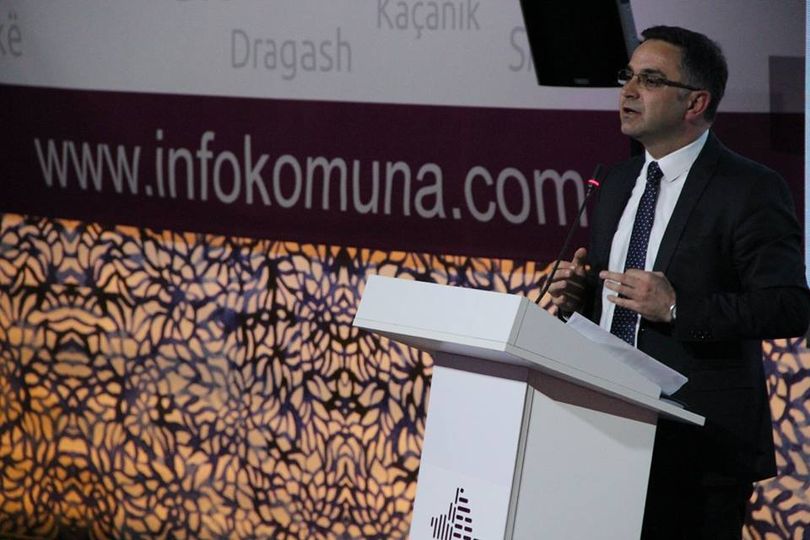
At the periodic conference on local governance and the special ceremony launching the newest portal, ‘Info Komuna’, I presented seven (7) problem points for municipalities that require emergency intervention.
In view of the stagnation and slow dynamics, the obstacles facing local government and the lack of a serious reform to make decentralisation functional in municipalities, KLGI, together with its partners, has assessed as essential the need for direct intervention in local government, field by field and sector by sector. Moreover, this comes as a result of the lack of amendments to the basic and sectoral laws to pave the way for strategic and sustainable development of the local level.
The 7 Points presented during the ceremony were:
1. Relations between Central and Local Government; Municipalities are caught between citizens’ demand for services and constant confrontation with central institutions, regional enterprises and government agencies. Direct intervention is therefore essential to provide full clarity on the role of municipalities and of the institutions operating at local level, whether through public, administrative or operational services. It is worth stressing that the municipality is the first hand of the state and that the first service of government comes through the municipality. A state’s achievements depend directly on the success of the municipality as an institution. Hence, the state is strong only if the municipality is strong.
2. Good Governance and Reforms (Relations between the Executive and the Legislature); KLGI aims for the municipality to be a responsible, efficient and functional institution, serving to strengthen legitimacy and empower local democracy, which in essence would serve accountable and transparent governance, the indispensable pillars of good governance. There is a range of policies, directives and services that create ambiguity and constant stagnation for functional decentralised governance. Therefore, without coordination and cooperation within institutions, with an emphasis on the executive and the legislature, municipalities put at risk their journey towards efficient local governance serving the development and well-being of citizens.
3. Establishment of New Municipalities; The establishment of one or more new municipalities should be an inclusive, transparent and consultative process. Existing municipalities have had sufficient legal opportunity, through the law on inter-municipal cooperation, to provide services in the areas that have submitted requests for the establishment of municipalities. The unwillingness of institutions to provide services as close as possible to citizens, whether through administrative offices or municipal communities, has driven the requests for new municipalities to grow. The establishment of new municipalities should not go ahead without clear criteria and analysis; otherwise this will lead to confusion, raising citizens’ expectations through electoral promises. This process cannot be arbitrary, without analysis and consultation, and depends entirely on the financial and administrative capacity of the municipalities that are proposed to be established. Kosovo could have as many as 68 municipalities, but the question is whether they will be functional and serve citizens.
4. The Law on Prishtina; it should facilitate the management of own-source revenue and at the same time give more power and opportunity to the municipal assembly in policymaking. Local government reform should be dealt with separately from the law on Prishtina as the capital. On the one hand, local government reform should have a multi-level and cross-sectoral assessment, and on the other, the Law on Prishtina must necessarily address specific aspects that enable Prishtina to function as the capital of the Republic. Without the adoption of the law on Prishtina, Kosovo’s legal framework for local governance and the constitutional requirement will remain incomplete. This is because the law on the capital is a constitutional law. The Law on Prishtina is not a law for mayors; it is the founding document for the sustainable development of the capital. Hence, better no law than a weak law that does not give Prishtina full functionality as the capital of the state.
5. The Legal Framework in relation to indictments of mayors: Given the indictments and convictions of mayors and the current situation in Kosovo, it is clear that the legal framework, day-to-day ‘ad hoc’ management and an unprofessional administration are pushing mayors into unlawful actions. Added to this is the fact that primary and secondary legislation are in constant conflict. Mayors are caught between citizens’ demands for service delivery and gaps, whether legal, financial or in the management of property and services. Through legal clarity we must untie the hands of mayors so that they can serve citizens as their mandate requires.
6. Integration of the Northern Municipalities: The main battle has turned to services; we are no longer dealing only with the political aspect, but the whole battlefield and focus turn to the question of who provides better services. It is essential that the road to genuine integration begin with concrete actions and achievements on the ground. If we do not provide quality, inclusive services to all citizens in every part without distinction, then we have left the door open for others to intervene and, as a consequence, we will greatly undermine the functionality of the state.
7. Establishment of the Association of Serb-Majority Municipalities; It is important that it be established within Kosovo’s Constitutional and legal framework, that it not have competences that are not in line with the current law, the Law on Local Self-Government, and that it have its own statute as the highest act adopted by the A/CSM. From the outset this Association has had two names and two purposes. Therefore, we must take the guidance of the Constitutional Court as a roadmap for building an institution that serves municipalities, serves development and, above all, serves the full integration of all citizens into Kosovo’s institutions.
The points I presented are in harmony with the local governance strategy 2016–2026, KLGI’s roadmap, regional developments and international trends. Therefore, KLGI and its partners will propose, through a policy paper, an efficient approach to making local governance functional.
KLGI, its staff and I personally are at the service of the institution and of officials, because we seek change for our country.