Municipalities must become a catalyst for European integration
The Executive Director of the KLGI Institute, Mr Besnik Tahiri, took part in the working group for the Western Balkans, where EU–Kosovo relations and the networking of the Western Balkans agenda were discussed. On this…
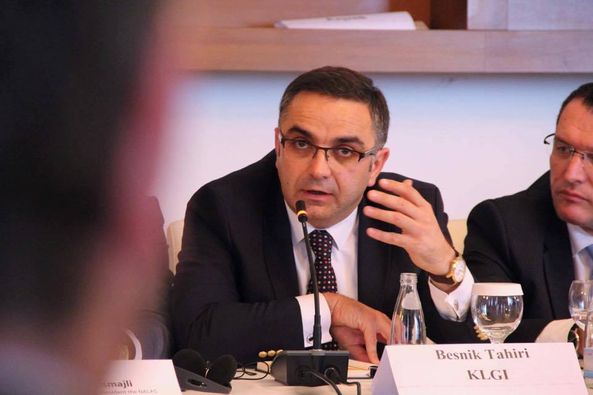
The Executive Director of the KLGI Institute, Mr Besnik Tahiri, took part in the working group for the Western Balkans, where EU–Kosovo relations and the networking of the Western Balkans agenda were discussed.
On this occasion, Mr Tahiri stressed that there is a need for assistance and mentorship at the local level from countries that have gone through the same phases and share more similarities, such as Croatia and Slovenia, so that good practices and models that increase efficiency and service quality and strengthen the local level can be adapted.
Furthermore, local governments in Kosovo have not used their potential to improve the quality of services through inter-municipal cooperation. There have, however, been good examples, such as the establishment of five regional economic zones, which were realised with the help of the European Commission.
Meanwhile, cross-border cooperation also needs to improve in order to enable the integration of the region’s economy and practices at the local level in Kosovo. Worth mentioning are the cooperation practices between Gjilan and Presheva, as well as between Gjakova and Bajram Curri.
It should be stressed that Kosovo must continue to advance the European model of local governance, turning municipalities into a catalyst for European integration. This is to be done by reaching European standards in key areas related to economic development and increased welfare.
Present at the event were the chair of the working group for the Western Balkans, Mr Franz Schausberger, mayors, deputy ministers, representatives of the European Union Office in Kosovo and other diplomatic representatives.