Municipalities must become generators of economic development
The KLGI Institute held the fourth module of the LGA programme, in which separate sessions addressed finance, economic development and social cohesion in municipalities. The module aimed to explore the challenges and…
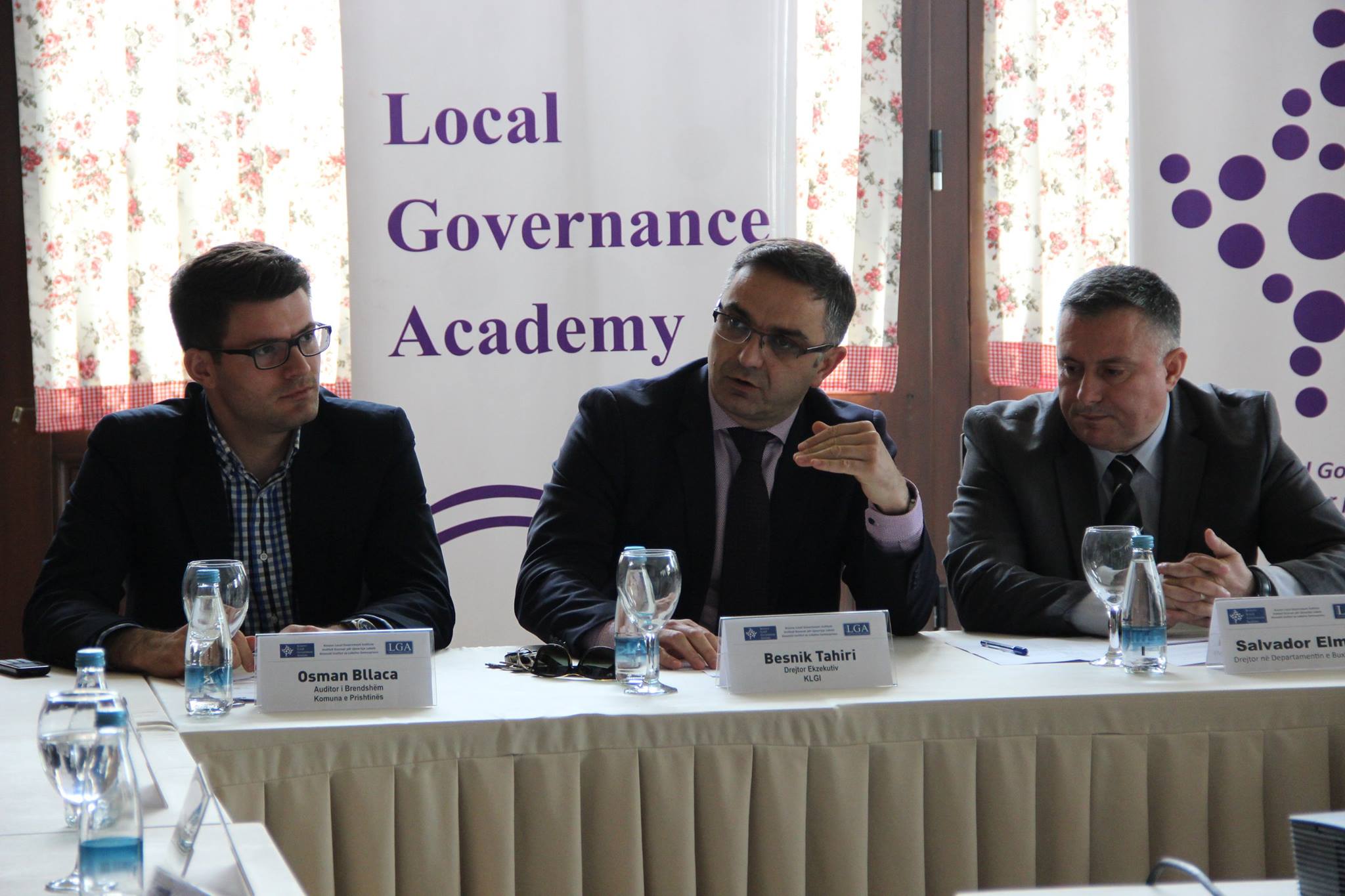
The KLGI Institute held the fourth module of the LGA programme, in which separate sessions addressed finance, economic development and social cohesion in municipalities. The module aimed to explore the challenges and prospects of local finance, as well as the important role of enterprises in local economic development and service delivery.
The lecturers in the first training session were Mr Salvador Elmazi, Director of the Budget Department at the Ministry of Finance, and Mr Besnik Tahiri, Executive Director of the KLGI Institute. On local finance and inter-institutional communication, Mr Elmazi said that many problems have been identified that require solutions and cannot be addressed without legal changes that enable greater financial and budgetary discipline, but also flexibility.
One of the main challenges identified was the funding formula, which does not correspond to efficient service as a result of decisions being taken without a professional, sustainable basis and without prior analysis. There is therefore a need for in-depth and detailed analysis before decisions are taken. Particular emphasis was also placed on the discretion of line ministries over capital investment in municipalities, where the shared conclusion was that the Law on Local Government Finance should analyse the extent of municipalities’ discretion or that it should be smaller.
In the second session, the role of small and medium-sized enterprises and their impact on economic development was addressed by Mr Agron Maxhuni, Secretary General of the MTI, and the role of inter-municipal cooperation by Mr Besim Kamberaj, Head of the Department for Regional Cooperation and Development.
As the first arm of the state, the municipality must necessarily drive a breakthrough in local economic development. Through strategic economic investments based on the natural capital that exists in small municipalities, through policies and incentives that line ministries should create, and in particular through the involvement of the private sector in localities with local economic development capacity, economic prospects can succeed.
The private sector must be supported, since it is the only address for local economic development and employment. The triangle of institutional actors – line ministries, municipality and private sector – must be made functional and coordinated. Other approaches are short-term policies with no real effect in reducing unemployment. Coordinating policies at the central and municipal levels is therefore a necessity of our time.
The LGA programme has 30 members, with a high level of representation from the participating municipalities: Prishtina, Suhareka, Dragash, Mamusha and Kllokot. The group also includes members from the MLGA, the National Audit Office and civil society
Finally, the participants worked in groups, where they had the opportunity to share the challenges and experiences they face in their daily work and to recommend solutions.
This module is supported by the Royal Norwegian Embassy and the Friedrich Ebert Foundation – FES.