The Norwegian Embassy and KLGI hosted a reception for mayors and local governance actors
The Ambassador of Norway to Kosovo, Mr Per Strand Sjaastad, together with the KLGI Institute, hosted a reception for all Mayors of Kosovo's municipalities, representatives of line ministries and domestic and…
The Ambassador of Norway to Kosovo, Mr Per Strand Sjaastad, together with the KLGI Institute, hosted a reception for all Mayors of Kosovo's municipalities, representatives of line ministries and domestic and international partners, to hold an informal discussion on the achievements, challenges and prospects in the field of Local Governance in Kosovo.
This meeting was organised for the project “Support for Stronger and More Sustainable Municipalities”, funded by the Norwegian Ministry of Foreign Affairs and implemented by the Kosovo Local Government Institute.
In his speech, the Norwegian Ambassador, Mr Sjaastad, stressed that the purpose of this meeting is to discuss how to advance local governance. Kosovo has made great achievements in the last ten years since its independence by establishing an inclusive system of local governance. The Norwegian Embassy will be a long-term, constructive partner for local governance, and at the same time a supporter of the KLGI Institute.
The National Coordinator for State Reforms, Mr Besnik Tahiri, thanking the Norwegian Embassy for its support for local governance, stressed that if municipalities produce results, the state is successful, because the municipality is the first hand of the state that provides services to the citizens of Kosovo. With regard to accountability, he stressed that nothing should be left bouncing between two addresses, but that issues should be dealt with until they are resolved.
The Executive Director of the KLGI Institute, Mr Besnik Muçaj, presenting the SSSM project, stressed that in less than a year and a half there have been over 500 direct beneficiaries from all municipalities, as well as representatives of line ministries and civil society. It is undeniable that Local Governance has achieved results, as shown by domestic and international reports.
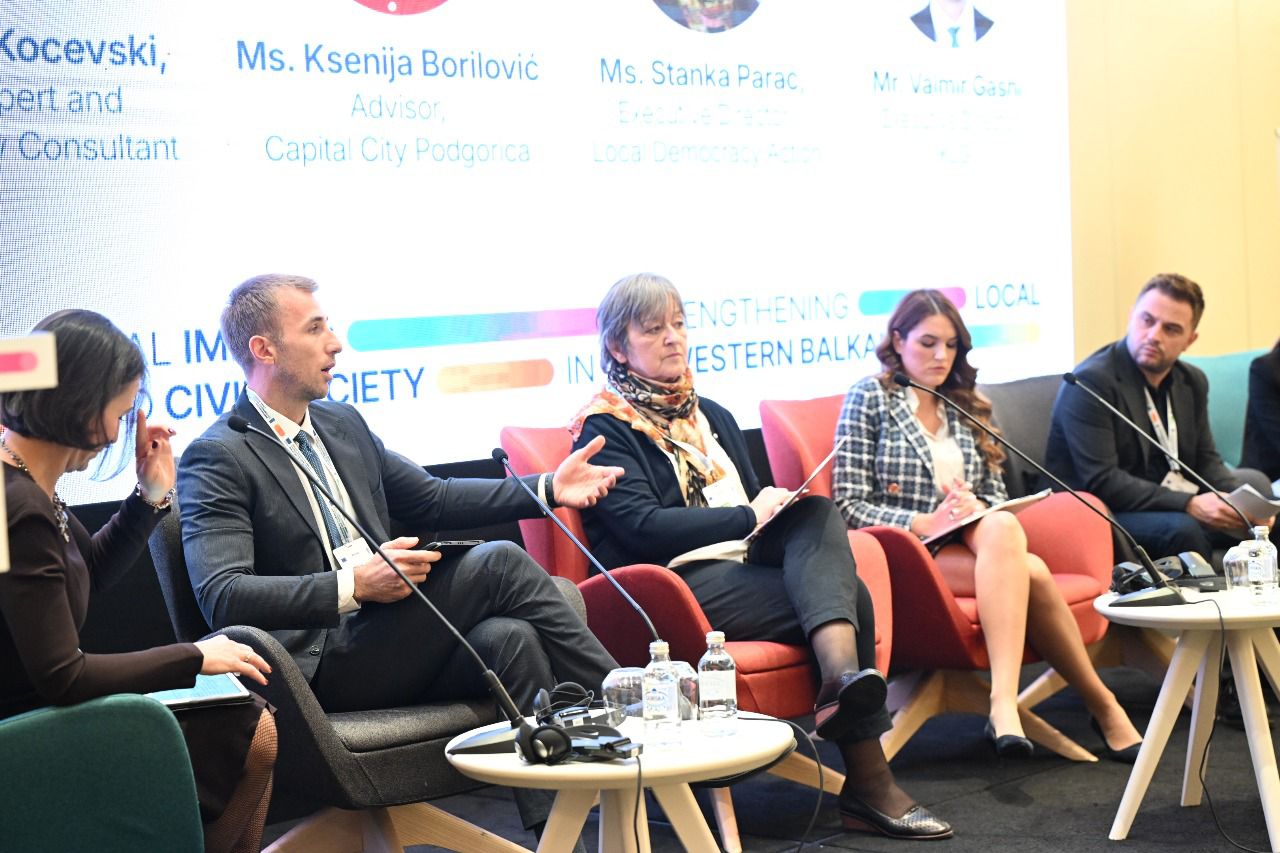
Despite the progress, work remains to be done on Strengthening local democracy; Increasing participation, Transparency and accountability; Equal gender representation in leadership and decision-making positions; Inclusion of the community and Civil Society; and, above all, increasing citizens' ownership of local policies.
The main aim of this SSSM project is to increase functionality, sustainability and ownership in relation to competences and capacity building in the field of local governance.
The project as such is divided into 4 implementation components: Improving legislation and reducing ambiguity in the field of local governance; Mentorships and improving inter-municipal, inter-institutional and inter-community cooperation; Training for local-level officials; Strengthening civil society at the local level.