Municipalities and the central level must speak with one voice
The KLGI Institute held the second module of the LGA programme, in which separate sessions addressed the relations between the central and local levels. The focus was on the strategic and developmental aspects of…
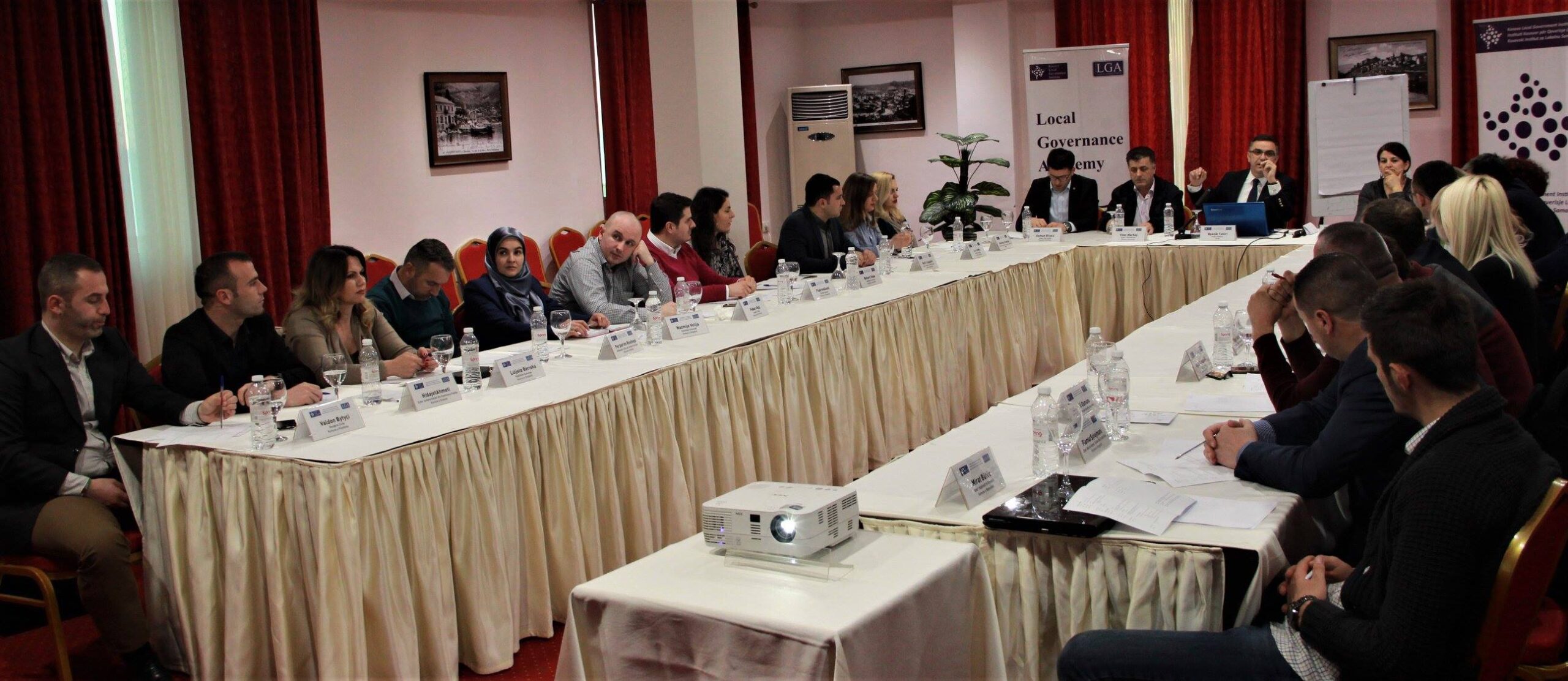
The KLGI Institute held the second module of the LGA programme, in which separate sessions addressed the relations between the central and local levels. The focus was on the strategic and developmental aspects of municipalities and on administrative reform through policy coordination, joint agendas and adequate funding of competences.
Beyond this, regional models were also analysed, in particular the local government reform process undertaken by Albania in order to address development challenges and European integration.
Throughout the sessions, discussions and group work, it was stressed that legal, procedural and functional ambiguities between levels of government are emerging as a major obstacle for municipalities in the functional implementation of competences and services. As a result of this complexity, municipalities are failing to draft sustainable development policies and plans.
The discussions also emphasised financial management by municipalities, given that the Law on Local Government Finance (LLGF) aims to strengthen the fiscal autonomy and management responsibilities of municipalities – in proportion to their competences for service delivery – while at the same time ensuring an efficient framework for inter-institutional fiscal responsibility.
Meanwhile, examples were used to analyse functional areas and sectors in municipalities, and it became clear that local governance still continues to operate amid ambiguity, ranging from a lack of coherence in policies and legislation, ad hoc management, complex procedures and weak oversight and accountability, to a lack of citizen involvement in decision-making.
Finally, it was stressed that the reform process must necessarily be pursued in parallel with a functional review of decentralisation, addressing the requirement that this process take place carefully and systematically, sector by sector and functional area by functional area.