Partial reform damages the system and functionality of municipalities
Within the third module of the Local Governance Academy programme, the KLGI Institute organised a discussion on the need for a functional review of local governance and alignment with European models of municipal…
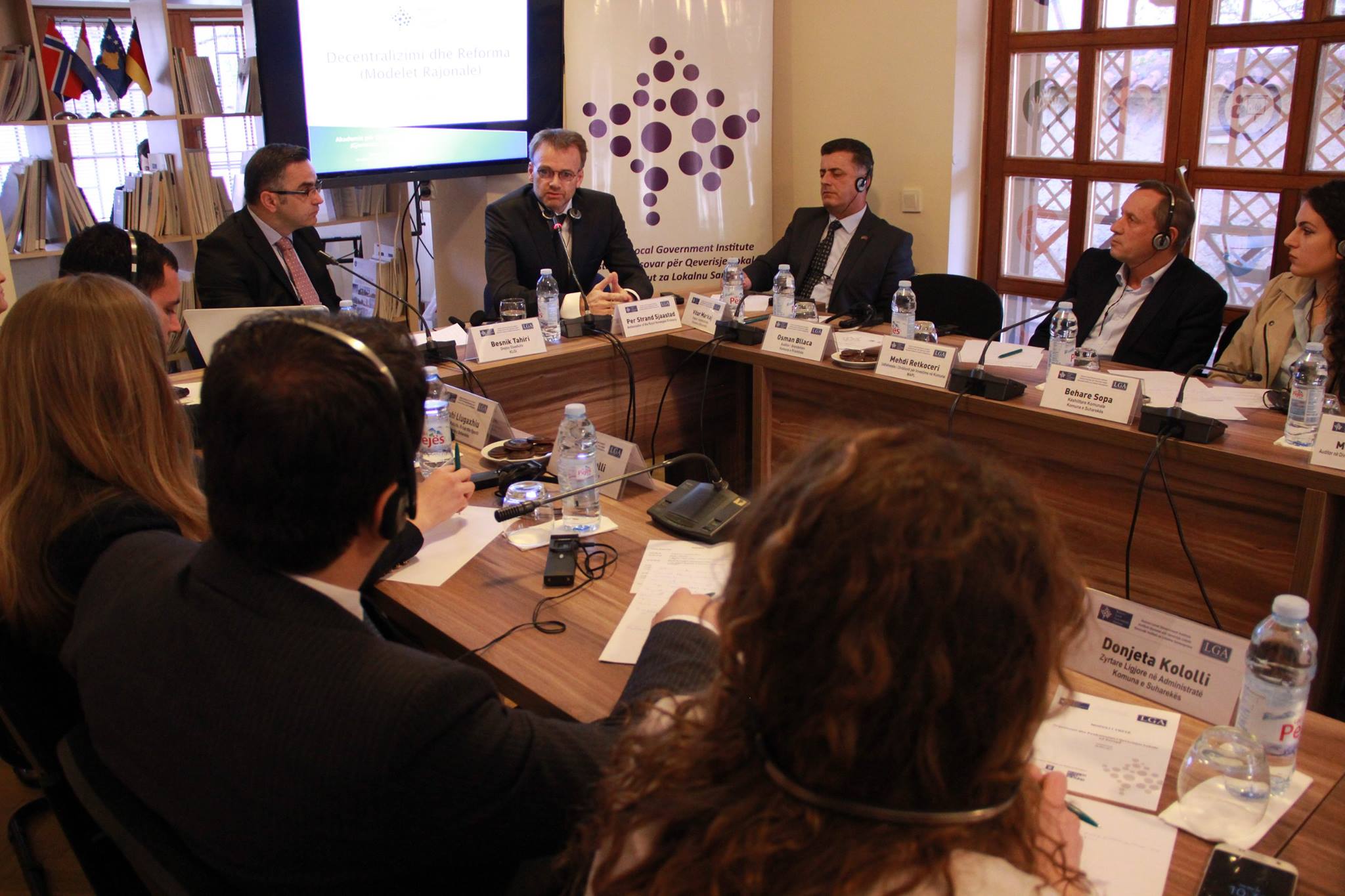
Within the third module of the Local Governance Academy programme, the KLGI Institute organised a discussion on the need for a functional review of local governance and alignment with European models of municipal functioning.
Separate sessions addressed the topic “Organisation and functioning of local government in Europe”, presenting models and good practices in this field.
The lecturers in this module were the Ambassador of the Kingdom of Norway, Per Strand Sjaastad, and the Programme Manager at DEMOS, Norbert Pijls. In addition to the experience they brought from their own countries, they are also familiar with the Kosovo model through their direct engagement in strengthening local governance. This was therefore a good opportunity to compare models in terms of organisation, structure and the way services are delivered.
Given that municipalities are the state’s first point of contact in delivering services, this module also served as an opportunity to reflect on the path to be followed in reforms towards embracing the European model.
The Ambassador of the Kingdom of Norway in Prishtina, Per Strand Sjaastad, spoke about the local government system in Norway. He emphasised that a central government is good only when local government has no problems and develops in an orderly way. He said that the municipality is the first and most important arm of a state.
Director Besnik Tahiri highlighted Norway’s trend towards fewer municipalities with more responsibilities, with decentralisation conceived on this basis. Tahiri stressed that the main challenge lies in financial capacity and the economic gap between urban and rural municipalities. The second challenge concerns administrative capacity, where there is a serious shortfall in the political decision-making process.
The Programme Manager at DEMOS, Norbert Pijls, compared the system of government of the Republic of Kosovo with that of the Netherlands. It was concluded that the main difference at the local level is that in the Netherlands the mayor is appointed by the King, whereas in Kosovo the mayor is elected directly by citizens. He also discussed other important issues, such as the sanctioning of municipalities on behalf of citizens, inter-municipal cooperation and professional schools.
The Kosovo Local Government Institute is offering a substantial programme in the field of local governance, known as the Local Governance Academy (LGA), the first of its kind in the Republic of Kosovo. The LGA is designed to serve as a platform and means of non-formal education for municipal officials and leaders in local governance. The LGA’s goals focus on supporting local governance and democratisation in Kosovo.
The programme has 30 members, with a high level of representation from the participating municipalities: Prishtina, Suhareka, Dragash, Mamusha and Kllokot. The group also includes members from the MLGA, the National Audit Office and civil society.