Public administration, a precondition for the efficient implementation of public policies
Within the framework of the programme “An effort towards sustainable and functional local governance”, the KLGI Institute held a study visit to institutions of the Republic of Albania, aimed at learning about the public…
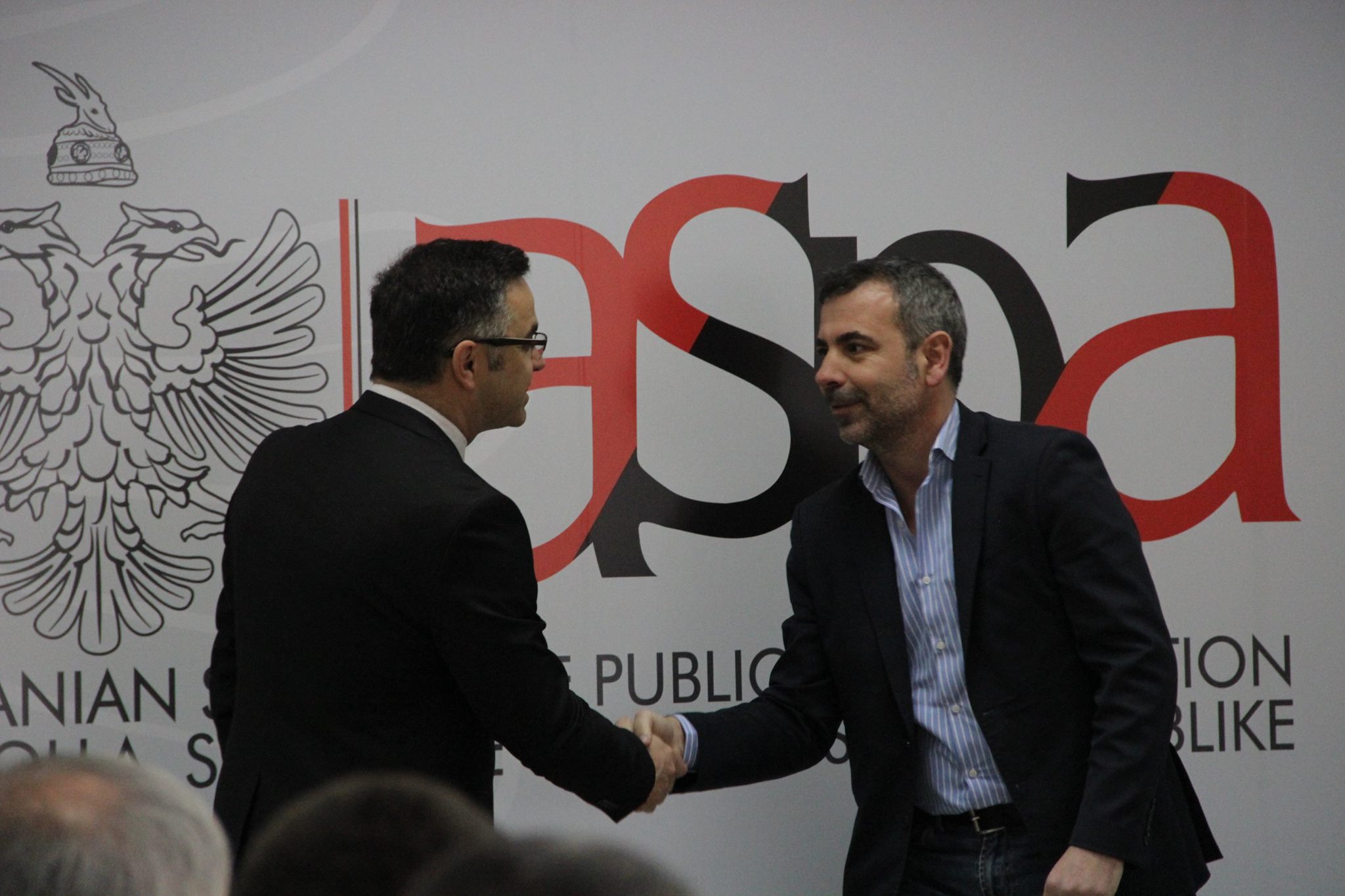
Within the framework of the programme “An effort towards sustainable and functional local governance”, the KLGI Institute held a study visit to institutions of the Republic of Albania, aimed at learning about the public administration reform process, the integrated management of administrative services and the field of public administration training. In separate meetings, participants had the opportunity to learn about the work of the Albanian School of Public Administration (ASPA) and the Agency for the Delivery of Integrated Public Services (ADISA) in the Republic of Albania.
First, the Executive Director of the KLGI Institute, Mr Besnik Tahiri, spoke about the need for cooperation and for adopting good practices from Albania in the integration process of both countries. On this occasion, Mr Tahiri opened the discussion by stressing that in developed countries good governance is no longer up for debate, for two reasons: first, because it has become the norm and part of the culture; and second, because there is advanced oversight and accountability, where the consequences of any deviation are clear.
Therefore, the very notion of functional and sustainable decentralisation is linked to the process of delivering fast services. The digitalisation of services has changed the very dimensions and concepts of decentralisation. The key to success, therefore, is innovation in the exercise and delivery of services.
Mr Fatmir Demneri, Director of ASPA, thanked the KLGI Institute for the visit and expressed willingness for further cooperation in sharing experiences throughout the reform process in Kosovo. On this occasion, he presented to the participants ASPA’s vision and commitment regarding the reform process, the steps taken towards raising standards in the delivery of public services, and the efforts to strengthen the administration’s capacities in drafting and implementing public policies.
Regarding the strengthening of administrative capacities, it was stressed that the number of officials trained by the School of Public Administration (ASPA) has increased eightfold. However, these capacities are still insufficient to meet European standards.
Among other things, it was said that ASPA plays a key role in assessing training needs over a three-year period and, together with the Department of Public Administration, measures the performance of the administration every four years. Since the administration system is unified, promotion and intra-institutional mobility of staff are permitted. ASPA is also responsible for assessing entry-level staff during their probationary period; if they do not receive a positive assessment, they cannot enter the administration system.
The link between decentralisation and the deconcentration of integrated public services was also observed at ADISA in Kavaja. The visit aimed to inform participants about the advanced models of public service delivery to citizens offered by this centre.
ADISA was established in response to the need of Albania’s citizens for efficient, high-quality and transparent public services. Its mission is to deliver public services by setting up and running reception counters for citizens (front office) and integrated one-stop-shop public service centres for services performed by institutions and agencies of the central government and/or local government units, in accordance with the legislation in force or the relevant agreements.
The visit showed that the administration has standardised processes and procedures, avoiding debates and divergent interpretations of procedures and documentation by the state administration. In other words, “the state must have one face”, where every civil servant should apply clear and precise procedures.
“This grant is funded by the Democratic Society Promotion (DSP) project – funded by the Swiss Cooperation Office in Kosovo (SCO-K) and the Ministry of Foreign Affairs of Denmark (DANIDA) and managed by the Kosovar Civil Society Foundation (KCSF)”.