KLGI held a workshop on completing the Draft Strategy for Regional Development 2020-2030
The Kosovo Local Government Institute (KLGI), in support of the Ministry of Regional Development (MRD), held a workshop on incorporating the second part of the comments from the Strategic Planning Office into the…
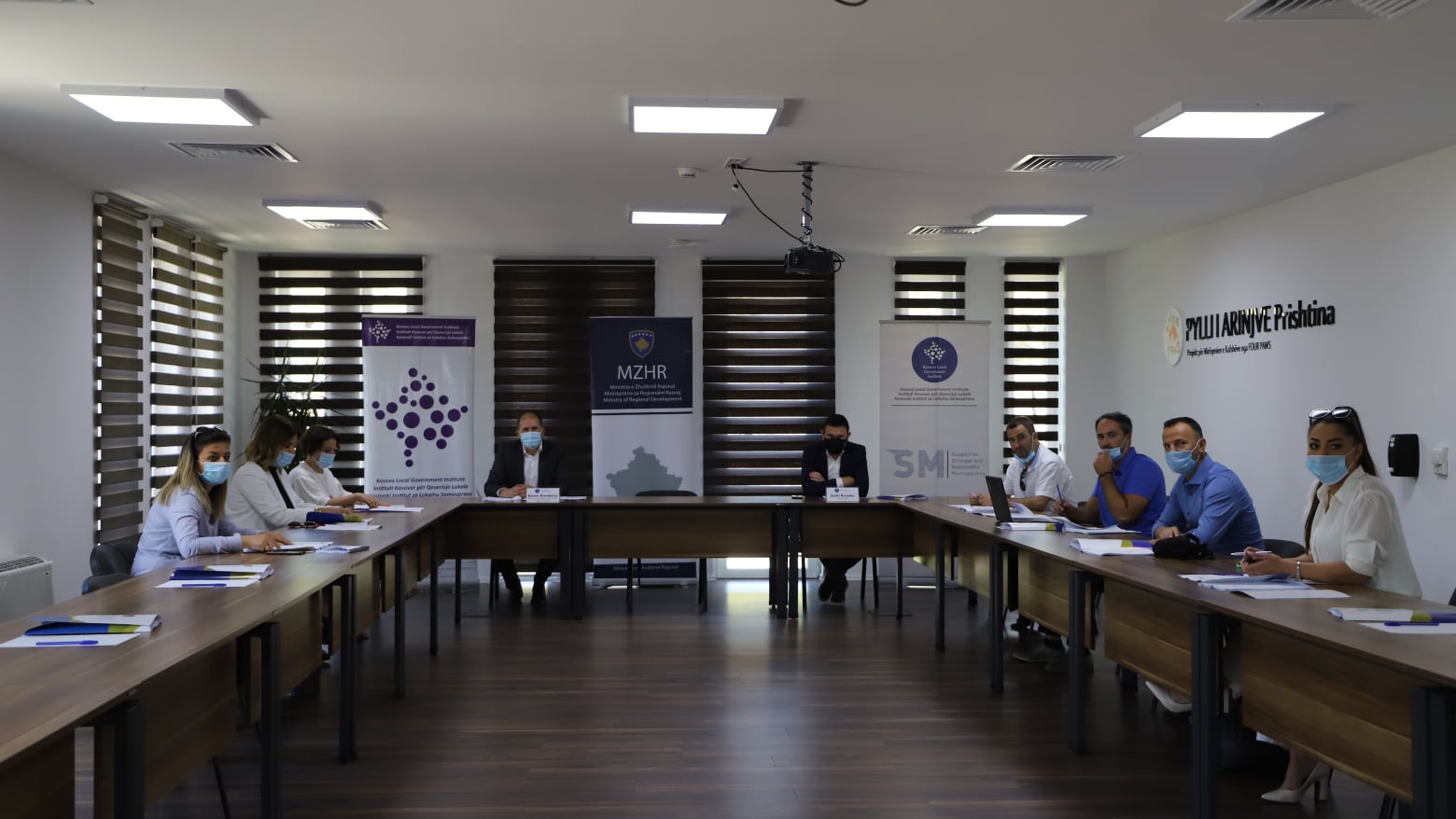
The Kosovo Local Government Institute (KLGI), in support of the Ministry of Regional Development (MRD), held a workshop on incorporating the second part of the comments from the Strategic Planning Office into the completion of the Draft Strategy for Regional Development 2020-2030.
The meeting aimed to discuss and complete the strategic objectives to be set out in this strategic document, with a focus on the action plan, the indicators and the financial impact of the strategy. Participants included representatives of the Ministry of Regional Development and of the Strategic Planning Office in the Office of the Prime Minister.
The Strategy for Regional Development sets out the strategic framework for achieving balanced and sustainable development of the country's regions.
This strategy aims to define the long-term priorities of regional development and enables the coordination of other sectoral policies for balanced regional socio-economic development in Kosovo. Above all, it contains clearly defined objectives and provides for the implementation of actions and the functioning of mechanisms that make it possible to achieve these strategic priorities in the field of regional development and inter-institutional coordination.
Balanced regional development aims to reduce disparities in socio-economic development and to raise the quality of life in development regions. Balanced regional development cannot be achieved without building the capacities of the regions, so that there is genuine competition between regions.
This discussion took place within the framework of the consultation platform that the KLGI Institute is offering institutions during the drafting of policies and legislation in the field of local governance.
This activity was carried out within the project ‘Support for Stronger and More Sustainable Municipalities (SSSM)’, funded by the Royal Norwegian Embassy in Kosovo.